
Salix amygdaloides
- noun
- Specialized
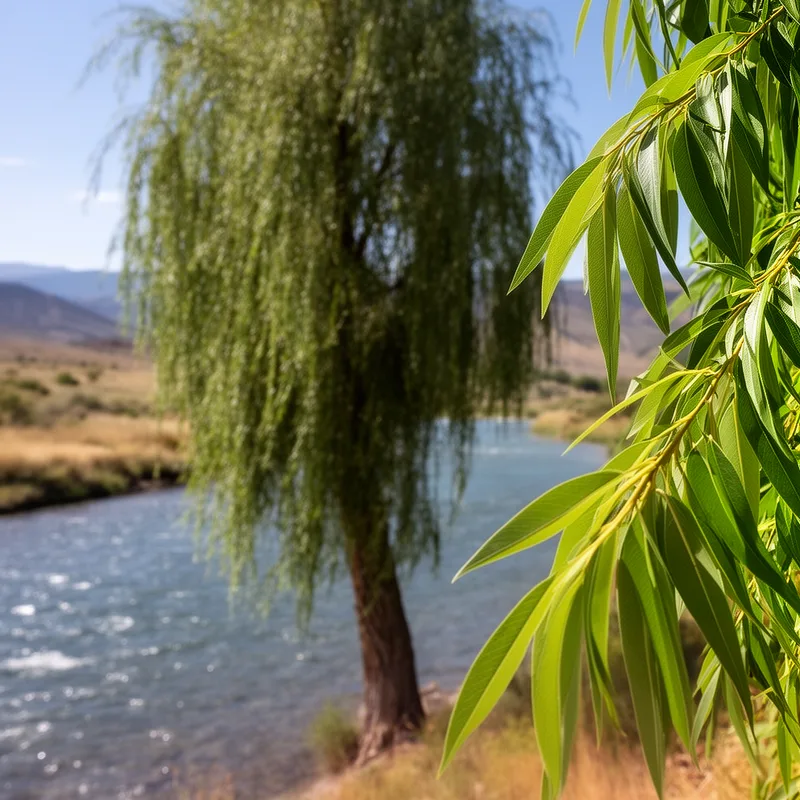
- Leaves of the Salix amygdaloides resemble those of almond trees, giving the species its name.
Examples
-
The Salix amygdaloides is commonly found along riverbanks in the western United States.
-
Botanists often study Salix amygdaloides for its adaptability to varied environments.
-
The Salix amygdaloides thrives near rivers.
-
Have you seen the Salix amygdaloides in bloom?
-
The Salix amygdaloides is valued for its ornamental beauty and ability to thrive in wet soils.
-
In spring, the Salix amygdaloides showcases its unique leaves, which resemble those of peach trees.
-
You can identify the Salix amygdaloides by its slender branches and glossy leaves along the riverside.
Synonyms

A willow tree with long narrow leaves like a peach tree

A tree with long, narrow leaves like a peach tree that grows near rivers

A willow tree that grows in the western United States with leaves shaped like almonds
Surface Forms
Morphology
Salix + amygdaloides
The binomial is compositionally built: Salix = willow and amygdaloides = 'almond/almond‑like' (Greek root), so the species name literally describes a willow with almond‑like leaves. However, 'amygdaloides' is a technical Latin/Greek-derived form not known to typical B1 learners, so the meaning is only partially transparent in practice.
Etymology
Salix amygdaloides comes from Latin and Greek words that describe how the plant looks: Salix means 'willow' and amygdaloides means 'almond-like' because the leaves look like almond or peach leaves. So the name points to a willow with almond-like leaves.

