
Salishan


 1
9.9
- proper noun
- /ˈseɪlɪʃən/
- Inside the teepee, Cogewea hears the stories, in Salishan, of her people, stories of the harm done to her people by white intruders.
- spoke Salishan
Examples
-
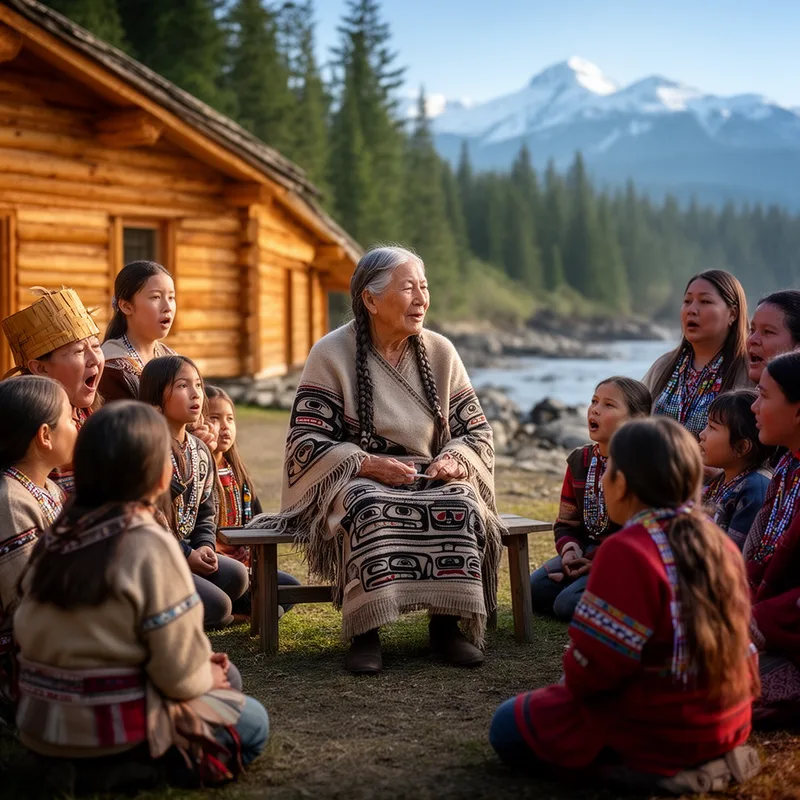
The Salishan peoples have a rich cultural heritage that dates back thousands of years.
-
There are twenty-two other languages in the Salishan family, and they await the same sad fate.
Academic text (2007) -
But geographic and social isolation is itself vanishing fast in every part of the world. Salishan languages, twenty-three in all, were widely spoken in the Pacific Northwest before whites arrived in force in the 1800s.
Academic text (2007) -
In Salishan Autobiography, Mourning Dove suggests she held mutually faithful beliefs in traditional Catholicism and Native spirituality during her life:
Academic text (1995) -
Mourning Dove herself spoke Salishan and English, and she struggled to produce grammatically correct Standard English—the language of published literature—for the balance of her life.
Academic text (1995) -
Many Native American languages, including those in the Salishan family, are endangered today.
-
Researchers study Salishan languages to preserve the unique history of the Pacific Northwest.
Surface Forms
Morphology
Salishan = Salish (transparent) = Salish + an
The suffix '-an' is a regular, productive formation meaning 'of or relating to' a people or place, so the meaning is directly derived from 'Salish'.
Etymology
Salishan comes from Salish, the English form of a native name for a group of tribes on the Pacific Northwest coast, and the ending -an means 'belonging to', as in American. So Salishan refers to the peoples who 'belong to' the Salish group.