

Saint Vitus dance
- noun
- /seɪnt ˈviːtəs dæns/
- Archaic
- Doctors explained to the worried parents that their child's unusual jerking motions were likely caused by Saint Vitus dance.
Examples
-
After contracting rheumatic fever, he developed symptoms of Saint Vitus dance, making it hard for him to sit still.
-
My legs started doing the Saint Vitus dance.
Fiction book (1997) -
The child's rapid movements were a clear sign of Saint Vitus dance, a complication of rheumatic fever.
Synonyms

 1
9.9
1
9.9

A condition that causes quick, uncontrolled jerky movements of the body


 1
9.9
1
9.9
A movement problem in children after rheumatic fever causing quick involuntary movements of the face, hands, and feet
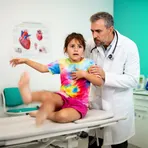
A medical condition causing sudden uncontrolled movements in children often after rheumatic fever
Surface Forms
Morphology
The word 'dance' transparently evokes movement, so a learner who knows the constituents might infer some movement-related meaning, but the phrase is an eponymic medical term (Saint Vitus) whose connection to involuntary choreic movements is historical and not predictable from the parts alone. Because the illness sense (a disorder with rapid involuntary movements) relies on specialized/historical knowledge of Saint Vitus rather than regular compositional semantics, the expression is only partially transparent to a B1 learner.
Etymology
Saint Vitus dance may come from old stories of people who, at the church of Saint Vitus, began to shake or move as if dancing without meaning to. Because those jerky movements looked like a wild dance, the phrase came to mean the medical problem of 'involuntary movements'.