
Rynchopidae
- noun
- /rɪŋˈkoʊpɪdi/
- Specialized
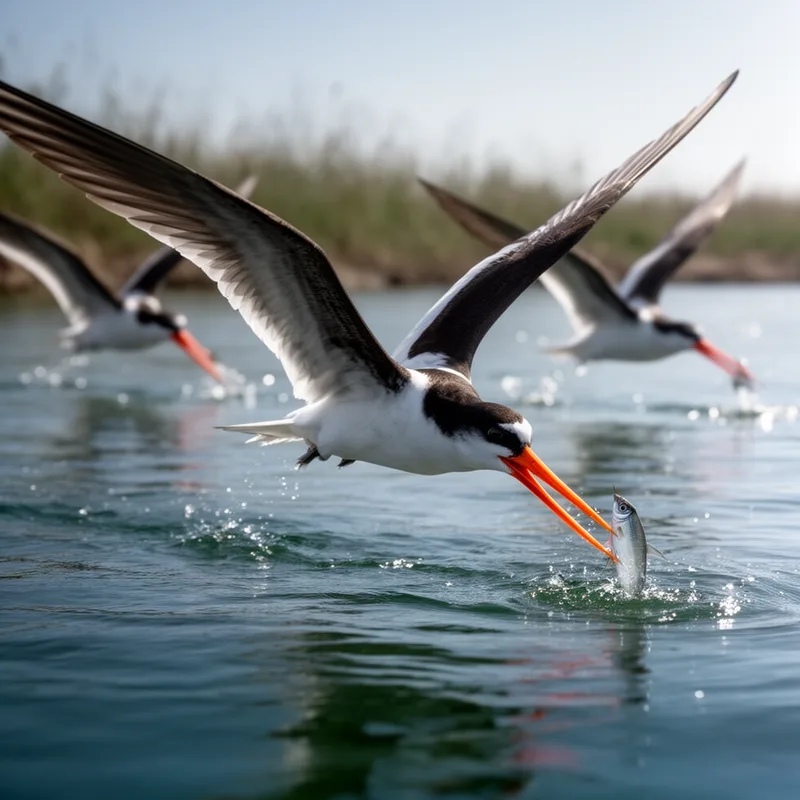
- The Rynchopidae are easily recognized by their elongated lower mandibles, which help them catch fish while flying.
Examples
-
Unlike other bird families, Rynchopidae have distinctive feeding habits that involve skimming the water's surface.
-
Conservationists are concerned about habitat loss affecting several species in the Rynchopidae family.
-
The Rynchopidae family includes several fascinating species.
-
Did you know that the Rynchopidae are known for their unique feeding habits?
-
The Rynchopidae family, known as skimmers, can be seen gliding above the water as they look for fish.
-
Birdwatchers often try to spot the Rynchopidae because of their unique bill shape and feeding behavior.
-
Among the diverse bird families, the Rynchopidae stand out for their long wings and the way they skim across the water.
Synonyms
A group of birds called skimmers that have long lower beaks

A seabird with a long lower beak that skims water to catch fish
Compounds
Surface Forms
Morphology
Rynchopidae = Rynchops (opaque) = Rynchops + idae
The suffix '-idae' is a specialised scientific family-ending unfamiliar to average learners, so the meaning is not easily derivable from the components for a general audience.
Etymology
Rynchopidae comes from Greek parts rhynch- meaning 'beak' or 'snout' and the ending -idae meaning 'family', so the name points to these birds' special long bills. These birds are called skimmers, and that image helps you remember how they use their long lower beak to 'skim' the water for food.

