
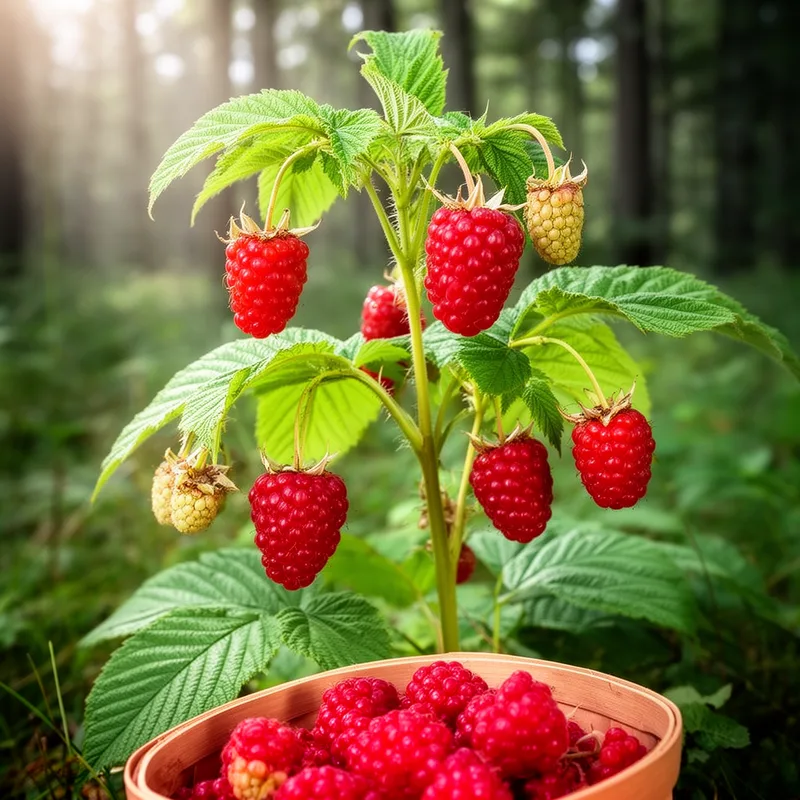
Rubus idaeus strigosus
- noun
- /ˈruːbəs aɪˈdiːəs strɪˈɡoʊsəs/
- Specialized
- The fruit of Rubus idaeus strigosus is prized for its sweet flavor and is commonly used in jams.
Examples
-
Many wild Rubus idaeus strigosus bushes can be found growing along forest edges in Canada.
-
The Rubus idaeus strigosus produces sweet red berries.
-
Botanists differentiate Rubus idaeus strigosus from its European relative based on its leaf and stem characteristics.
-
Have you tried the fruit from Rubus idaeus strigosus?
-
Many wild Rubus idaeus strigosus bushes can be found growing along forest edges in Canada.
-
The fruit of Rubus idaeus strigosus is prized for its sweet flavor and is commonly used in jams.
-
The Rubus idaeus strigosus plant is recognized for its thorny stems and delicious red fruits.
Synonyms

 64
1.0
64
1.0

A small soft red fruit that grows on a bush
 1
2.7
1
2.7
A bush or its small soft red fruit that people eat


 1
2.3
1
2.3
A woody bush that grows small edible berries on prickly stems
 1
2.3
1
2.3
A plant that grows naturally and makes small red or orange berries you can eat

A North American raspberry plant that makes sweet red berries

A bush native to North America that produces small red berries you can eat
Surface Forms
Morphology
Rubus + idaeus + strigosus
This is a Latin scientific name (genus + species/variety) composed of specialized taxonomic terms; while 'Rubus' signals a plant genus, the epithets 'idaeus' and 'strigosus' are obscure Latin forms that a B1 learner would not interpret as 'red raspberry' or a North American variety. Taxonomic composition is systematic for specialists but not semantically transparent to average learners, so the plant identity cannot be derived from the constituents.
Etymology
Rubus idaeus strigosus comes from old Latin words: Rubus means a bramble or 'raspberry', idaeus may come from Mount Ida where the fruit was known, and strigosus means 'bristly' or rough stems. So the long name is just a simple picture of a wild red raspberry bush, which is why it refers to a North American edible raspberry.