

Rubus chamaemorus
- noun
- UK
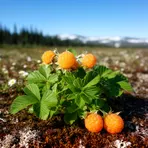
- You can identify Rubus chamaemorus by its low growth and distinctive orange berries.
Examples
-
The Rubus chamaemorus thrives in cool, boggy regions of Scandinavia and northern Canada.
-
Jams made from Rubus chamaemorus are considered a delicacy in some northern countries.
-
The Rubus chamaemorus plant thrives in cold climates.
-
I found some Rubus chamaemorus berries while hiking.
-
The yellow berries of Rubus chamaemorus are often used to make delicious jams in Scandinavia.
-
In the boggy areas of the north, Rubus chamaemorus can be found growing among other wild plants.
-
Many people enjoy picking Rubus chamaemorus during the summer for its sweet, edible fruit.
Synonyms


 1
9.3
1
9.3
A low northern plant that makes small edible orange berries

A low plant that grows in bogs and makes yellow edible berries

A creeping plant that lives many years and makes soft yellow-orange berries that taste like baked apples
Surface Forms
Morphology
Rubus + chamaemorus
This is a Latin binomial (taxonomic) name whose parts are not common English vocabulary—'Rubus' is a genus label and 'chamaemorus' is not a lexical English word—so a B1 learner who knows the constituent items would not be able to infer the everyday meaning 'cloudberry'. Scientific names are consistent across languages but require specialized botanical knowledge beyond B1, making the meaning non-derivable from the parts.
Etymology
Rubus chamaemorus comes from old plant words: Rubus was used for berry bushes and chamaemorus means 'ground mulberry', a low berry like a mulberry. So the name paints a simple picture — a low, creeping berry bush that bears orange edible fruit, the plant we now call the 'cloudberry'.