
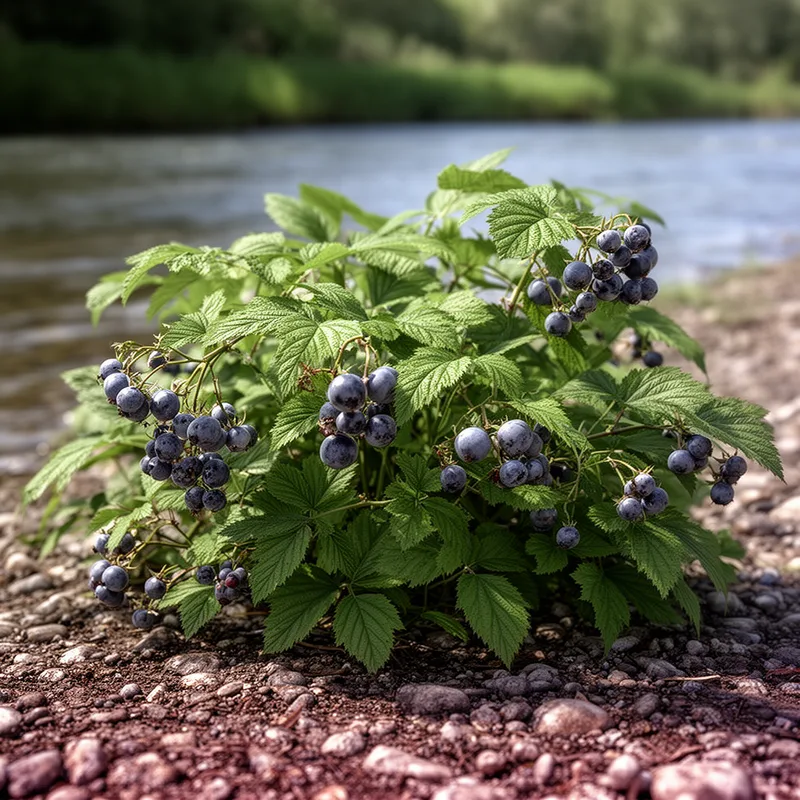
Rubus caesius
- noun
- UK
- Many birds feed on the dewberries produced by Rubus caesius during late summer.
Examples
-
The Rubus caesius grows wild along the riverbanks in many parts of Europe.
-
Botanists noted the unique bluish bloom on the fruit of Rubus caesius.
-
The Rubus caesius is often found in hedgerows.
-
Have you ever tasted a Rubus caesius?
-
The Rubus caesius is known for its sweet bluish-black dewberries that are popular among foragers.
-
In late summer, the Rubus caesius attracts many wildlife species looking for its delicious fruit.
-
You can identify the Rubus caesius by its sprawling vines that often cover the ground in sunny areas.
Synonyms

A low wild bush that grows along the ground and produces small dark blue berries you can eat
Surface Forms
Morphology
Rubus + caesius
This is a Linnaean binomial in Latin rather than a semantic English phrase: 'Rubus' is a taxonomic genus name and 'caesius' is not a recognizable English word, so a B1 learner who knows English constituents would not be able to derive the meaning 'a creeping European bramble species bearing dewberries.' The name functions as a proper noun referring to a specific species and its sense is not compositionally predictable from the parts for typical learners.
Etymology
Rubus caesius comes from Latin words: Rubus meaning 'bramble', an old word for a wild thorny bush, and caesius meaning 'bluish'. The plant's fruit has a bluish bloom, so the name is like 'bluish bramble' and helps you remember the plant.

