

Rosa moschata
- noun
- Specialized
- She planted a Rosa moschata near the arbor to enjoy its climbing branches and delicate flowers.
Examples
-
Botanists are studying Rosa moschata for its unique musky fragrance and adaptability.
-
The garden was filled with the sweet aroma of Rosa moschata in full bloom.
-
The Rosa moschata blooms beautifully in spring.
-
Many gardeners love Rosa moschata for its fragrance.
-
Gardeners appreciate Rosa moschata for its lovely clusters of fragrant white flowers.
-
In the Mediterranean, Rosa moschata thrives with its climbing branches and delightful scent.
-
During spring, Rosa moschata captivates visitors with its beautiful blossoms and musky aroma.
Synonyms


 1
7.2
1
7.2
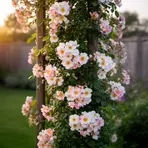
A climbing rose with loose clusters of small sweet smelling flowers
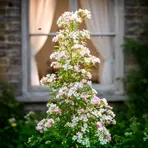
A rose with small white or pink flowers and a faint sweet smell
Surface Forms
Morphology
Rosa + moschata
This is a botanical binomial formed from the genus name 'Rosa' (rose) plus the species epithet 'moschata', which historically denotes a musky scent; if a learner knew both parts (including the Latin-derived 'moschata' = musky), they could compositionally infer 'a musky-scented rose'. However, 'moschata' is a Latin/formal epithet not listed here and is not a common English word, so the meaning is not fully predictable for an average B1 learner without botanical or Latin knowledge.
Etymology
Rosa moschata comes from old Latin words: Rosa means rose and moschata means 'musk-scented'. So the name describes a rose with a musky smell and often climbing, curved branches.