
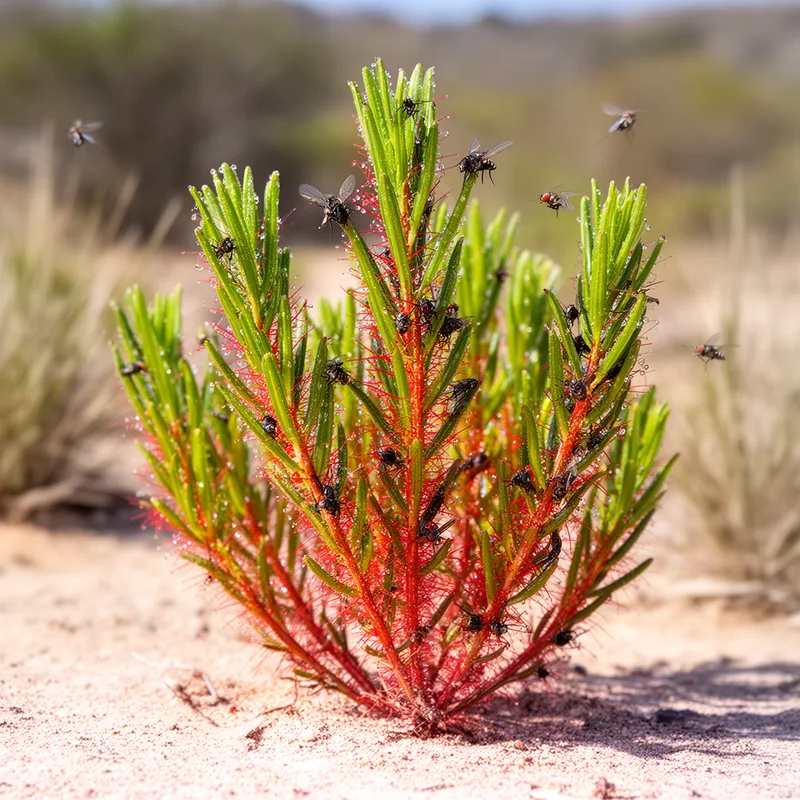
Roridulaceae
- noun
- /ˌrɔːrɪˈdjuːleɪʃiː/
- Specialized
- Botanists sometimes debate whether Roridulaceae should be classified within Droseraceae.
Examples
-
Members of the Roridulaceae possess sticky leaves to trap insects.
-
The Roridulaceae are native to the western part of South Africa.
-
The Roridulaceae family consists of unique carnivorous plants.
-
Did you know that Roridulaceae are found in South Africa?
-
Members of the Roridulaceae possess sticky leaves to trap insects.
-
The Roridulaceae are native to the western part of South Africa.
-
The Roridulaceae family consists of unique carnivorous plants.
Synonyms
A small group of flowering plants from South Africa with sticky leaves that trap insects
Compounds
- Specialized
A small group of flowering plants from South Africa with sticky leaves that trap insects
Surface Forms
Etymology
Roridulaceae comes from the plant name Roridula, which comes from Latin roridus meaning 'dewy', because these shrubs have sticky, dew-like drops on their leaves that trap insects. The ending -aceae is the Latin ending for a 'plant family', so Roridulaceae means the 'family of Roridula' and this image helps you remember a small family of sticky, insect-catching South African shrubs.

