
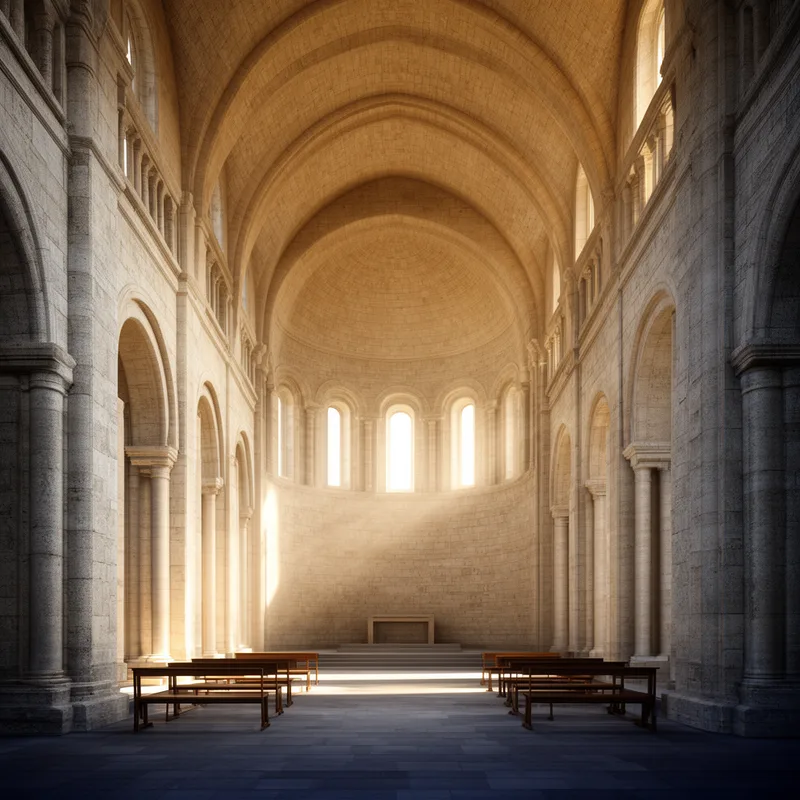
Romanesque architecture
- noun
- /ˌroʊməˈnɛsk ˌɑrkɪˈtɛkʧər/
- Specialized
 :
arquitectura románica
:
arquitectura románica
- Visitors to the museum can admire several models showcasing Romanesque architecture from the 11th and 12th centuries.
Examples
-
The church is a stunning example of Romanesque architecture, featuring thick walls and rounded arches.
-
The Nun's Church, a gem of Irish Romanesque architecture, was completed in 1167.
Academic text (2000) -
Many castles in France display the distinct elements of Romanesque architecture, including vaulted ceilings and decorative carvings.
Synonyms


 1
9.6
1
9.6
A style of building used for churches with rounded arches and thick walls in medieval Europe
How Ornate

Surface Forms
Morphology
This is a straightforward compositional noun phrase: 'Romanesque' names a particular style and 'architecture' names building design, so together they mean 'architecture in the Romanesque style.' The relation follows a common pattern (style + domain) that is cross-linguistically regular, so a B1 learner who knows both constituents can reliably infer the intended meaning.
Etymology
Romanesque architecture comes from builders in the Middle Ages copying the look of old Roman buildings, especially their round arches and heavy walls. So 'Romanesque' means 'in the Roman way', and today the phrase describes the medieval style with round arches, thick walls, and big towers.