
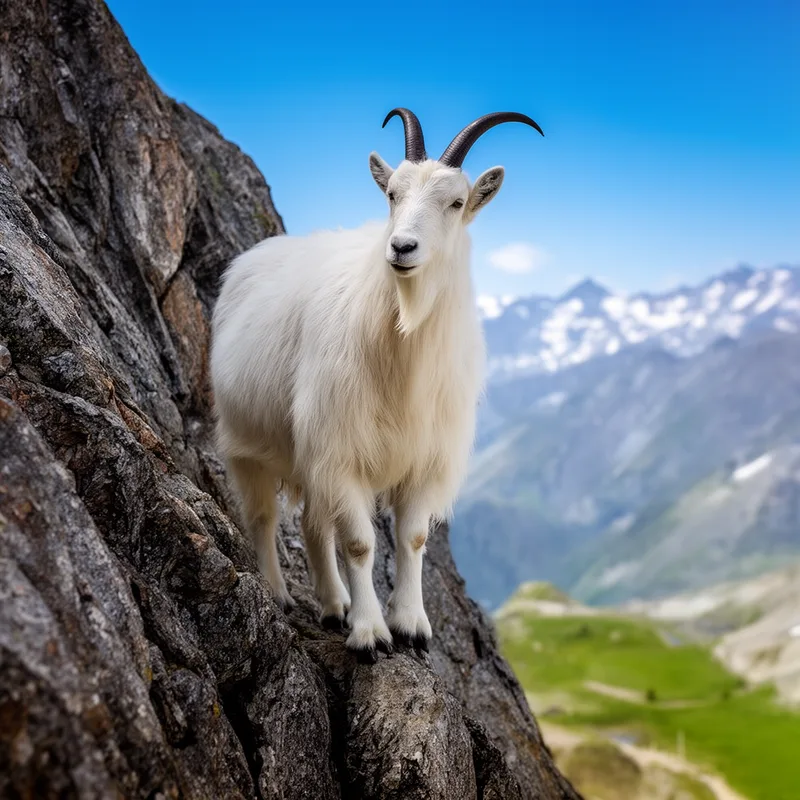
Rocky Mountain goat
- noun
- /ˈrɑːki ˈmaʊntən ɡoʊt/
- US
- We spotted a Rocky Mountain goat grazing near the alpine meadow.
Examples
-
The Rocky Mountain goat is known for its incredible climbing skills.
-
Many Rocky Mountain goats can be seen in Glacier National Park.
-
The Rocky Mountain goat is well adapted to life on steep, rugged cliffs.
-
Tourists are always thrilled to see a Rocky Mountain goat climbing effortlessly among the rocks.
-
The Rocky Mountain goat is known for its incredible ability to climb steep, rocky cliffs.
-
In national parks, visitors often spot the Rocky Mountain goat gracefully navigating the rugged terrain.
-
The Rocky Mountain goat uses its strong hooves to maintain balance on precarious ledges.
Synonyms
 1
2.7
1
2.7

A large white animal with curved horns that walks easily on steep rocky slopes

A wild goat that climbs steep mountain cliffs in northwest North America

A North American mountain goat that lives on steep cliffs
Surface Forms
Morphology
The phrase is a straightforward descriptive compound: 'rocky' + 'mountain' + 'goat' yields a goat associated with rocky mountains (i.e., a goat from the Rocky Mountains). This compositional pattern (adjective + place noun + animal) is common and cross-linguistically transparent, so a B1 learner who knows the constituents can infer the meaning.
Etymology
Rocky Mountain goat: The name comes from a simple picture — a goat that lives on the steep, rocky slopes of the Rocky Mountains and climbs cliffs with sure steps. That's why the name refers to a large, white, 'sure-footed' mountain mammal.