
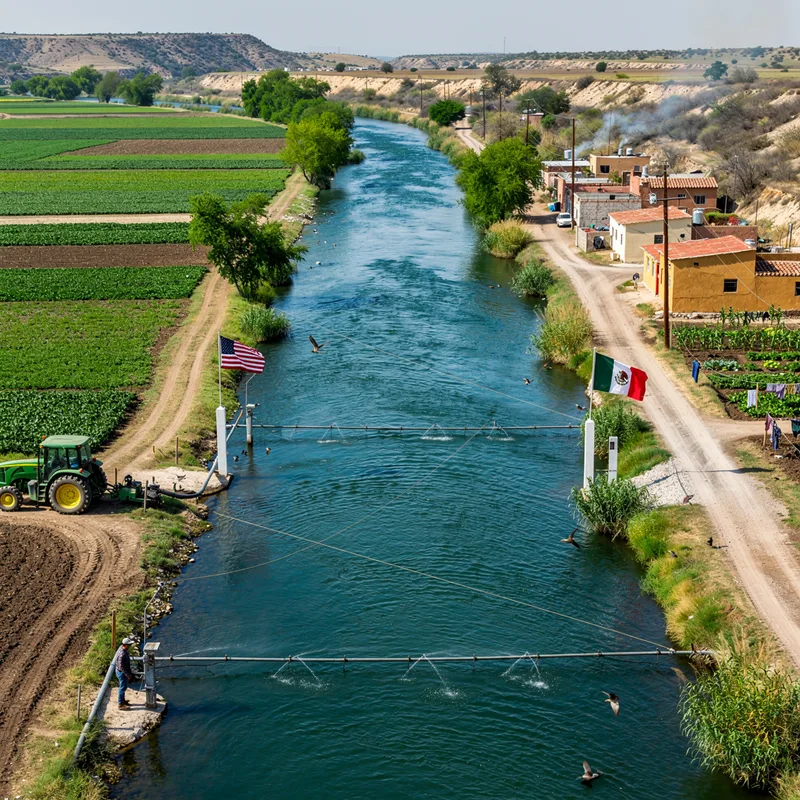
Rio Bravo
 2
4.5

- proper noun
- /ˈriːoʊ ˈbrɑːvoʊ/
- They agree to meet along the Rio Bravo, north.
- Rio Bravo (also known as Rio Grande)
Examples
-
At three in the morning, he sat on the bank of the Rio Bravo, listening to the flow of the water and waiting.
-
"The richness and diversity of wildlife and plants in the Rio Grande/Rio Bravo basin is likely unmatched by any desert river system in the world," says Ty Fain, president of the Rio Grande Institute.
Academic text (2000) -
At three in the morning, he sat on the bank of the Rio Bravo, listening to the flow of the water and waiting.
Fiction book (1996) -
Took most of his people and crossed the Rio Bravo into Mexico.
-
"I can show you across the Rio Bravo," the coyote said.
Fiction book (1996) -
More than 9 million people living in the Rio Grande/Rio Bravo basin have a great stake in a healthy river system, according to Jennifer Atchley of the World Wildlife Fund's Chihuahua Desert Program.
Academic text (2000) -
Conservation groups are warning of impending ecological disaster if the United States and Mexico do not take immediate steps to conserve the threatened wildlife of the Rio Grande, called the Rio Bravo in Mexico.
Academic text (2000) -
Ms-Perez: We had to cross the Rio Bravo between Chihuahua and Texas.
Synonyms
 22
3.0
A large river that forms part of the border between the United States and Mexico
Surface Forms
Morphology
rio + Bravo
The element 'rio' clearly means 'river' in Spanish, so a learner who knows the constituent words can infer this is the name of a river (i.e., a river called Bravo). Proper-name formation with a generic noun + epithet is compositionally transparent across languages, so the basic referent (a river) is immediately comprehensible even if the learner does not know its specific identity as the Rio Grande.
Etymology
Rio Bravo: The name comes from Spanish, where Rio means 'river' and Bravo means 'wild' or 'fierce', because early Spanish people found the water fast and often flooding. So the name paints a picture of a powerful river and is still used for the river that forms part of the border between the United States and Mexico.