
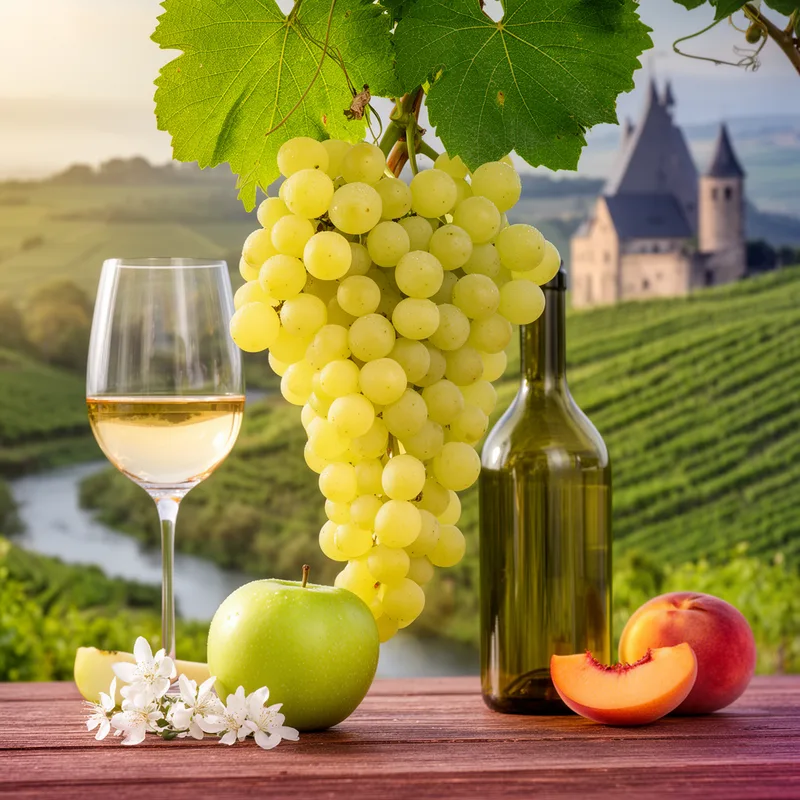
Riesling
 5
6.2
5
6.2

- noun
- /ˈriːzlɪŋ/
- When visiting California wineries, I always make sure to try a few Riesling varieties, as they can vary greatly in flavor.
- Dry Riesling
- Riesling wine
- bottle of Riesling
Examples
-
Riesling is an aromatic grape that originated in the Rhine region of Germany.
Blog text (15) -
Her eyes rolled; yes, this would be great with a very dry, authentic German Riesling.
Blog text (4) -
The typical Riesling falls into a narrow range of green apple, sour apple, and lime.
Blog text (8) -
Syrah and a dry Riesling have also won plaudits.
Blog text (19) -
Producers in Oregon, Washington, Idaho, and Michigan are also making some stunning Riesling.
Blog text (4) -
This particular Riesling has almost a clear, translucent color with an aroma of cedar, pine, honeysuckle, and white flowers.
Blog text (15) -
There was a chilled bottle of Riesling in the refrigerator, but she bypassed it for lime-flavored seltzer.
Fiction book (1996) -
We got 4 bottles of the Forge Riesling when we were in the FLX a few weeks ago—very interesting wine to say the least.
Blog text (8) -
Many wine enthusiasts appreciate the unique floral notes and crisp acidity of Riesling during tastings.
-
The restaurant's wine list featured a delightful Riesling that paired perfectly with the spicy curry dish.
Surface Forms
Etymology
Riesling is a German name probably from the old verb rieseln meaning 'to trickle'. Imagine sweet grape juice trickling from ripe grapes in the Rhine area, and that picture helps you remember this is a special white grape used for aromatic wines.