
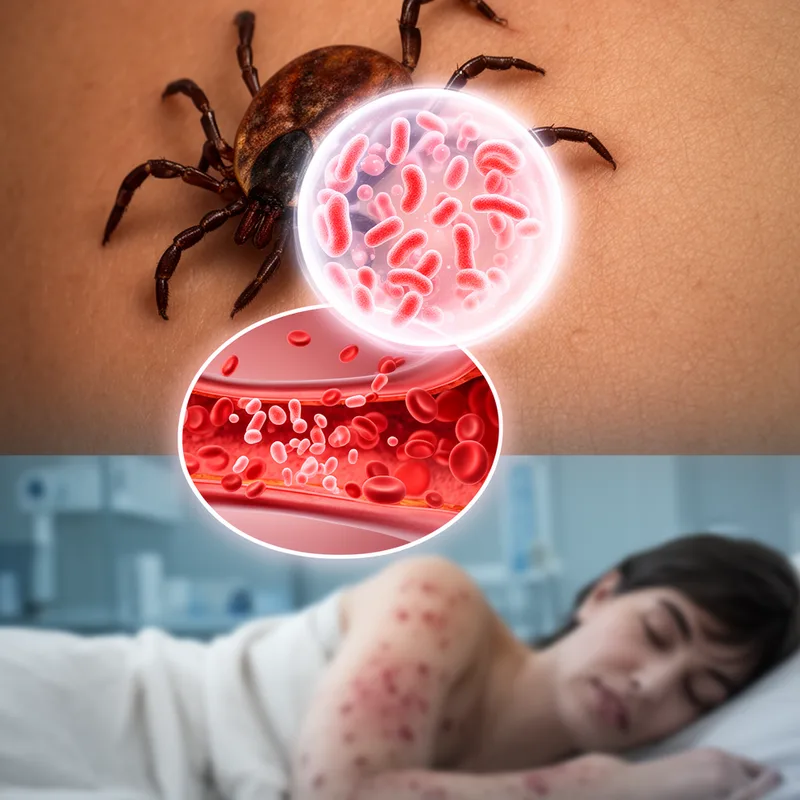
Rickettsiaceae


 1
9.9
- noun
- /ˌrɪkɛtˈsiːəˌsiː/
- Specialized
- Researchers studied how Rickettsiaceae infect arthropods and are transmitted to vertebrates.
Examples
-
The Rickettsiaceae family includes organisms responsible for several serious infectious diseases.
-
Did you know that Rickettsiaceae can be transmitted by ticks?
-
Accurate identification of Rickettsiaceae is crucial in diagnosing certain fevers and rashes.
-
The Rickettsiaceae family includes several genera that are important for public health.
-
Accurate identification of Rickettsiaceae is crucial in diagnosing certain fevers and rashes.
-
The Rickettsiaceae family includes organisms responsible for several serious infectious diseases.
-
Researchers studied how Rickettsiaceae infect arthropods and are transmitted to vertebrates.
Synonyms
 1
9.9
Tiny living things that look like bacteria, live in insects such as ticks, and can make animals and people sick
Compounds
- Specialized
1
9.9
Tiny living things that look like bacteria, live in insects such as ticks, and can make animals and people sick
Surface Forms
Morphology
Rickettsiaceae = Rickettsia (opaque) = Rickettsia + aceae
The form is built by adding the technical Latin taxonomic suffix '-aceae' to the genus name; this specialized scientific formation is not readily interpretable by general learners.
Etymology
Rickettsiaceae comes from the scientist's name Ricketts plus the scientific family ending -aceae, which means 'family'. So Rickettsiaceae names the family of tiny organisms first linked to Dr. Ricketts, and that is why the word refers to a group of disease-causing microbes.