
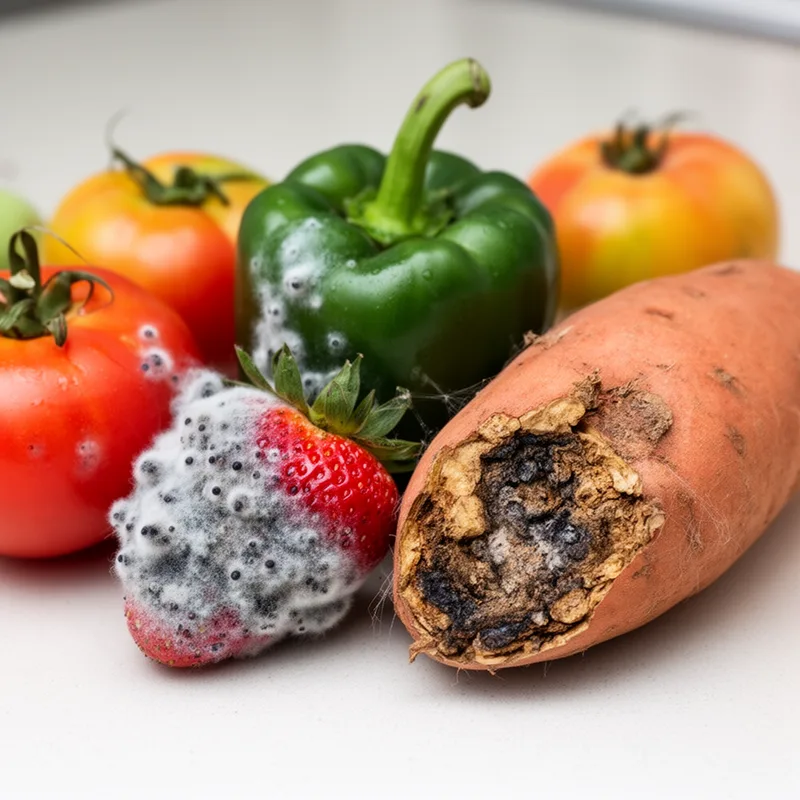
Rhizopus stolonifer
- noun
- /raɪˈzuːpəs stoʊˈloʊnɪfər/
- Specialized
- Farmers must be cautious of Rhizopus stolonifer, as it can lead to significant losses of sweet potato crops due to dry rot.
Examples
-
When storing vegetables, it's important to keep them dry to prevent outbreaks of Rhizopus stolonifer, which thrives in moist conditions.
-
In addition, the CDC says it has detected two more fungi, Rhodotorula larynges and Rhizopus stolonifer, in unopened vials of the drugs.
Blog text (14) -
In addition, the CDC says it has detected two more fungi, Rhizopus stolonifer and Rhodotorula larynges, in unopened vials of the drugs.
Synonyms

A mold that makes fruit and vegetables soft and watery and makes dry rot rings on sweet potato roots

A small living thing that makes fruits and vegetables rot, often making dry rings near sweet potato roots
Surface Forms
Morphology
Rhizopus + stolonifer
This is a Latin binomial (scientific species name) rather than a compositional English phrase; its meaning as a particular fungus that causes rot is an arbitrary taxonomic label and cannot be derived from everyday English knowledge of the parts. One constituent ('stolonifer') is not a normal English word and even knowing 'Rhizopus' as a fungus would not let a B1 learner predict the specific disease-causing meaning, so the expression is opaque to learners.
Etymology
Rhizopus stolonifer is the Latin name for the black, fuzzy mold that often spoils bread and fruit. The second part, stolonifer, comes from a word for 'runner' and gives the picture of thread-like runners that 'spread' across food, so the name helps you remember it causes stored produce to 'spoil'.

