
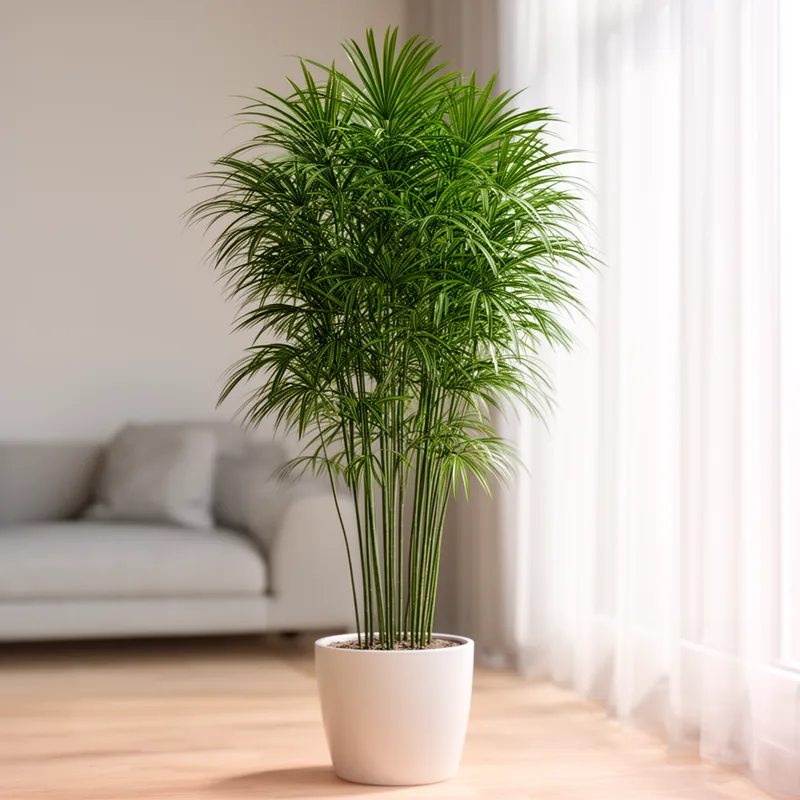
Rhapis humilis
- noun
- Specialized
- Collectors prize Rhapis humilis for its elegant, slender appearance in decorative landscaping.
Examples
-
Unlike its relative, Rhapis humilis thrives in shaded indoor environments.
-
The botanical garden features a rare Rhapis humilis near the conservatory entrance.
-
The Rhapis humilis is often used in indoor landscaping.
-
Have you seen a Rhapis humilis in the garden center?
-
Many interior designers choose Rhapis humilis for its adaptability to indoor lighting conditions.
-
At the annual plant show, I was amazed to see various Rhapis humilis displayed for their unique textures.
-
The nursery offers healthy specimens of Rhapis humilis, perfect for adding a touch of elegance to your home.
Synonyms

A small palm plant that has thin stems and grows well indoors

A Chinese palm with thinner stems and leaves than the common lady palm
Surface Forms
Morphology
The binomial is compositional: Rhapis (a genus of small palms) combined with the Latin epithet humilis (meaning low stature/ humble) yields a meaning of a low-growing or small Rhapis palm. Even though it is a scientific name, the adjective-like role of 'humilis' makes the species sense directly predictable from the constituents for a learner who knows both parts.
Etymology
Rhapis humilis probably comes from an old Greek word and a Latin word: Rhapis may mean 'needle' or 'small stick', pointing to its thin stems, and humilis means 'low' or 'short'. So the name creates a simple image of a small, slender palm that stays close to the ground.

