
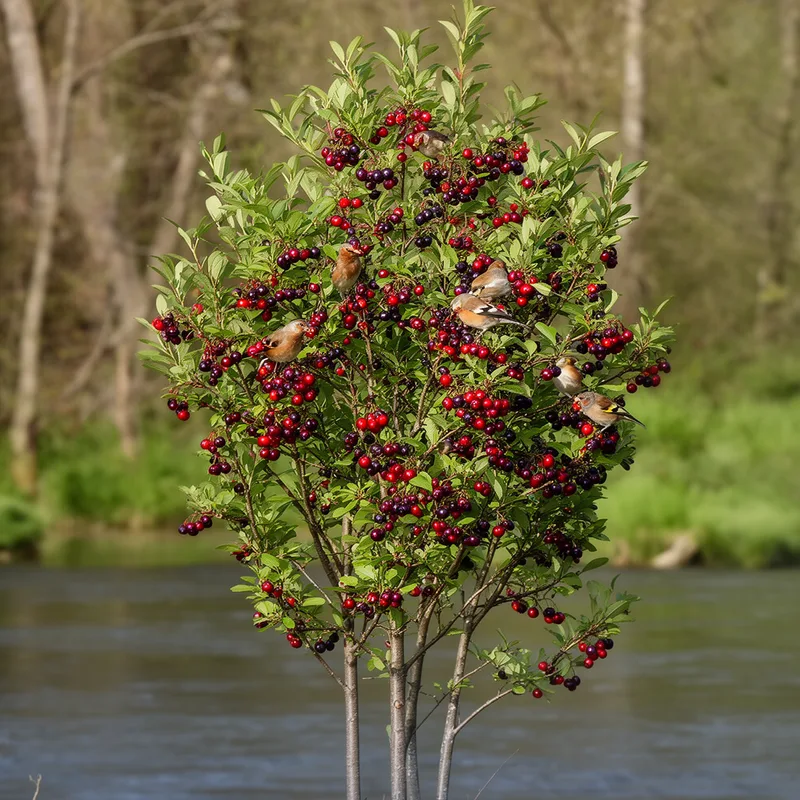
Rhamnus frangula
- noun
- Specialized
- Many birds feed on the fruit of Rhamnus frangula in late summer.
Examples
-
The Rhamnus frangula is often found near wetlands.
-
Botanists surveyed a woodland dominated by Rhamnus frangula near the riverbank.
-
The berries of the Rhamnus frangula are known for their purgative properties.
-
Have you ever seen a Rhamnus frangula tree?
-
In the forest, the small deciduous tree known as Rhamnus frangula provides shelter for various wildlife.
-
During our hike, we spotted a Rhamnus frangula tree with its distinctive berries.
-
The native Rhamnus frangula can be easily identified by its unique gray bark.
Synonyms

A small tree that grows in wet places with shiny leaves, small green flowers, and black berries
Surface Forms
Morphology
Rhamnus + frangula
This is a Latin binomial (genus + species) and functions as a scientific name rather than a compositional English phrase; the second element 'frangula' is not a standard English word and does not transparently convey the common name. Knowing 'Rhamnus' only indicates the genus (a type of buckthorn) but does not allow a B1 learner to infer the specific species identity or the common name 'alder buckthorn' without specialist knowledge of taxonomic naming. Therefore the meaning is not derivable from the parts for an average B1 learner.
Etymology
Rhamnus frangula may come from old Greek and Latin words. Rhamnus was a word for a 'bush' and frangula comes from Latin meaning 'to break', because the tree's thin branches break easily, so the name points to a small bushy tree and explains why people call it the 'alder buckthorn'.

