
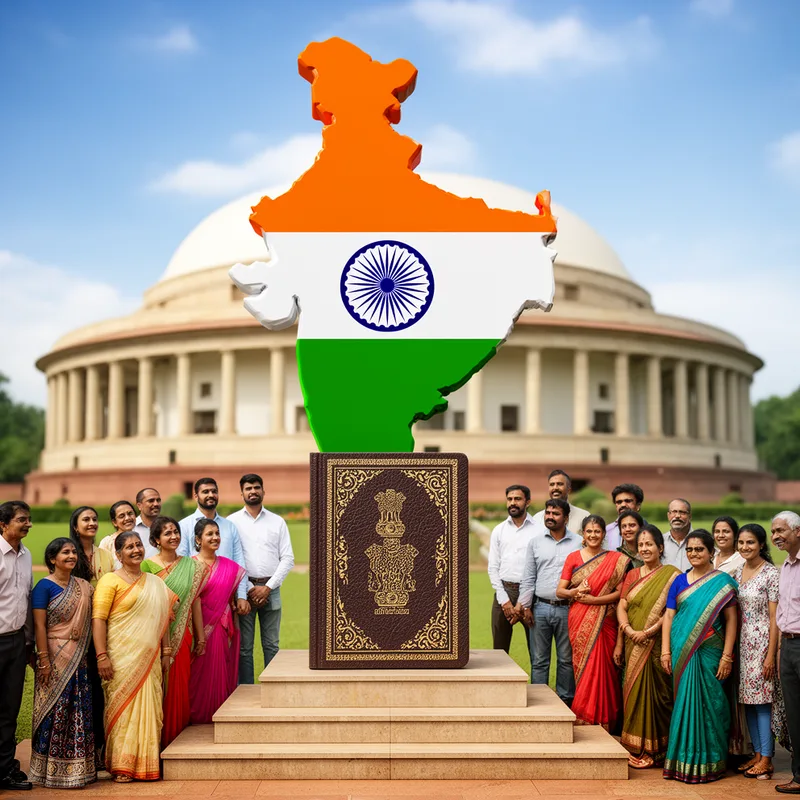
Republic of India
- proper noun
- Under the Congress party's stewardship, the Indian constituent assembly concluded its deliberations by 1949, and the constitution of the Republic of India came into effect on January 26, 1950.
Examples
-
The Republic of India is known for its diverse culture and history.
-
Tourists often visit the Republic of India to experience its rich heritage.
-
The Republic of India became a sovereign nation in 1947.
Synonyms

 783
1.0
783
1.0

A large country in South Asia with many people and different cultures
 2
7.1
2
7.1
The official Hindi name for the country India
Surface Forms
Morphology
The phrase 'Republic of India' is directly compositional: a learner who knows 'republic' (a state governed by representatives), 'of' (indicating possession/association), and 'India' can infer it names India as a republic. This naming pattern 'Republic of [country]' is cross-linguistically common and follows standard noun phrase composition, so the meaning is immediately accessible to B1 learners.
Etymology
Republic of India comes from India's change after British rule: the country became independent in 1947 and adopted a new constitution in 1950. The word Republic here means 'a country where people choose leaders', so the name shows it is an independent nation.