
Renascence
- noun
- /rɪˈneɪsəns/
- William McLoughlin's Cherokee Renascence details the early nineteenth century as the Cherokees faced increased pressure from white settlers and federal "civilization" programs; a centralized republican government gradually replaced the political role of clans, and the nation began maintaining internal order, offering protection from enemies, and providing national identity.
Examples
-
Such a distance was absent from both medieval renascences; that is, the "incomplete" revivals of antiquity that occurred in the Carolingian era and then again in the twelfth century.
Academic text (2005) -
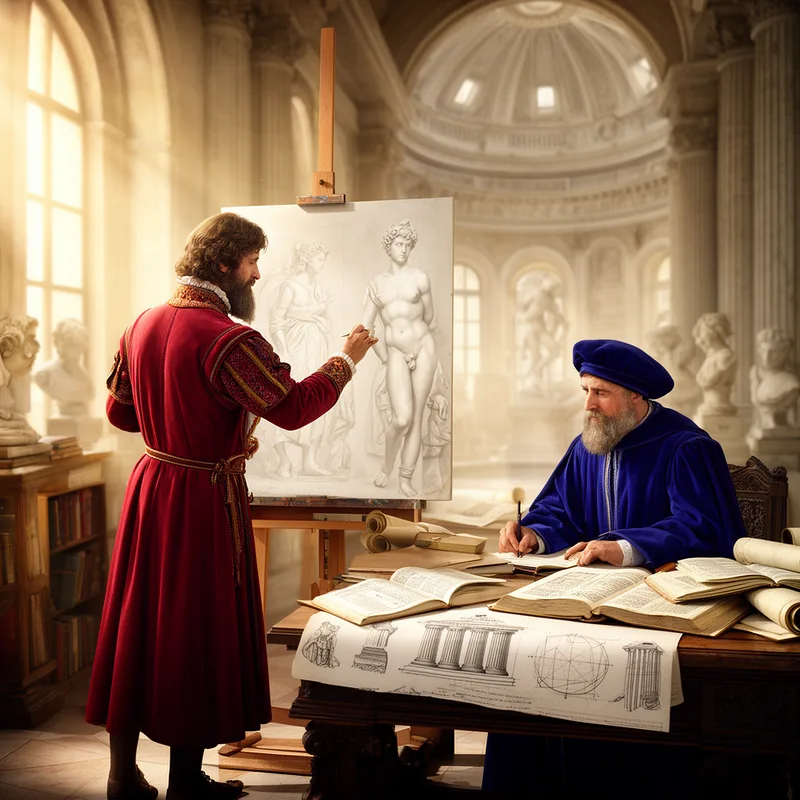
The Renascence was a period of great cultural revival in Europe, influencing art and literature for centuries.
-
During the Renascence, artists like Leonardo da Vinci and Michelangelo created masterpieces that are celebrated today.
-
The intellectual advancements of the Renascence helped pave the way for the modern era of science and philosophy.
Synonyms
 18
5.8
18
5.8

A period in Europe from the 14th to 17th century with new art, science, and learning
 12
6.1
12
6.1
A time when art, learning, or culture become active and popular again
How Influential

Surface Forms
Morphology
Renascence = renaissance (semi-transparent) = re + nascence
The relation to 'renaissance' (a readily known word) is clear, but 'renascence' is an uncommon/archaic variant and the spelling/rarity may obscure recognition for learners.
Etymology
Renascence comes from Latin parts re- meaning 'again' and nasci meaning 'to be born', so it means 'born again' or 'rebirth'. That's why Renascence names a time when art, learning, and culture were renewed, the same idea as the better-known word renaissance.