

Reformation
 14
6.4
14
6.4

- noun
- /ˌrɛfəˈmeɪʃən/
- Luther was a key figure of the Reformation, a movement that began as a protest against certain church practices.
- Protestant Reformation
- Counter-Reformation
- History of the Reformation
Loading YouTube…
Watch on YouTubePlus Martin Luther led to the Reformation, led to the counter Reformation, led to the religious wars.
- Plus Martin Luther led to the Reformation, led to the counter Reformation, led to the religious wars.
- That doesn't mean that, you know, events like the Reformation or the Second World War don't have significance well beyond that.
- And with that, the we had the Protestant Reformation, Martin Luther called the printing press God's highest act of grace.
- In fact, that was the period in church history when there was a major shift in this whole exorcism thing with the Reformation.
- Because what happened in the Protestant Reformation was that various.
- Well, the whole Protestant Reformation was based out of grace and some of our Catholic friends struggle with that, Others love it.
Examples
-
When we think about Edward, we often think of him as a boy King, as a footnote to the reign of his father, but actually the Protestant reformation really should set his reign apart and we should look more closely at just what Edward achieved.
-
It took place in a context of the Reformation in Europe.
-
Oh, it was one of those religious things during the Reformation.
-
Has this king forgotten the Reformation?
-
Our generation's probably the worst since the Protestant Reformation.
-
By removing direct theological doctrine from the law, the Protestant Reformation allowed the law to develop in new ways.
Academic text (1991) -
Martin Luther's action was followed by the turbulence of the Reformation and Counter-Reformation.
Academic text (1990) -
The Nikolaikirche has served Protestant worship since 1539, when the Reformation came to Leipzig.
Academic text (1996) -
Their differences are so great, that Edward cannot conceive of his sister Mary succeeding to the throne and undoing the Protestant reformation that he has enacted upon the country.
-
The exhibition chronicles the Reformation's expansion from Germany to the rest of Europe and eventually the world.
Synonyms
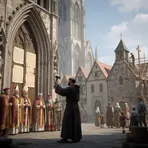 2
6.5
2
6.5
A 16th-century movement that changes the Roman Catholic Church and leads to new Christian churches
Compounds
2
6.5
A 16th-century movement that changes the Roman Catholic Church and leads to new Christian churches
 1
8.7
1
8.7
A movement in the Catholic Church in the 1500s to strengthen Catholic belief and practice after the Protestant Reformation
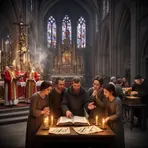
- Formal
Religious movements before the Protestant Reformation that helped lead to it

Making serious changes in your own behavior and character to become a better person
Surface Forms
Morphology
Etymology
Reformation comes from re- 'again' and form 'shape', so it literally means 'to shape again'. The 16th-century Reformation was a movement to 'shape the church again' by changing its beliefs and practices, which is why the word now refers to that major religious change.