
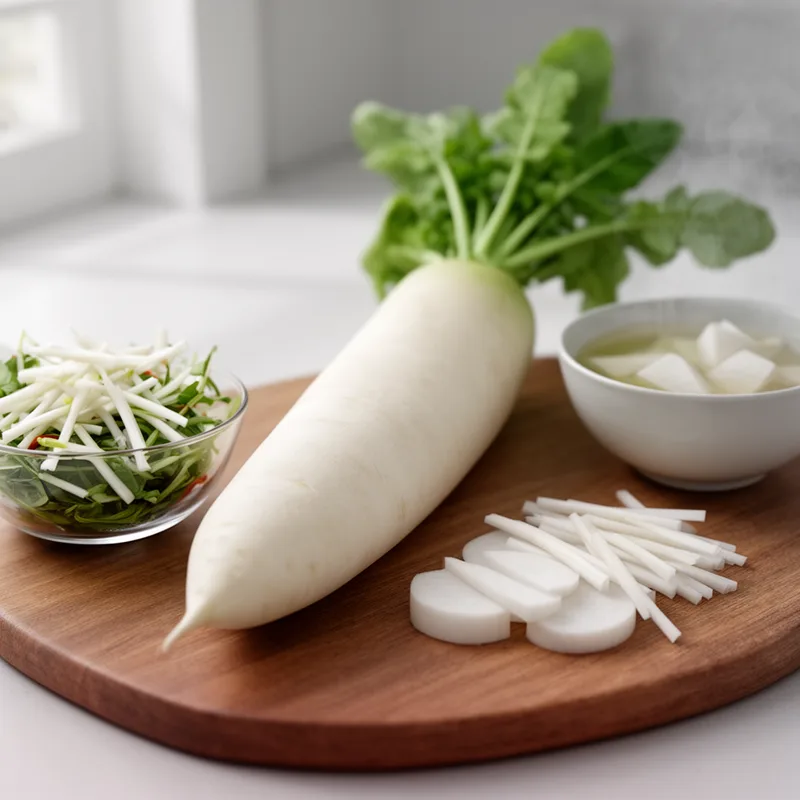
Raphanus sativus longipinnatus
- noun
- Specialized
- The chef sliced some Raphanus sativus longipinnatus to garnish the salad with its refreshing taste.
Examples
-
Many Japanese dishes feature Raphanus sativus longipinnatus as a crunchy, flavorful ingredient.
-
Farmers in Asia often cultivate Raphanus sativus longipinnatus for both its culinary and health benefits.
-
Raphanus sativus longipinnatus is delicious.
-
I love Raphanus sativus longipinnatus!
-
Farmers in Asia often cultivate Raphanus sativus longipinnatus for its crunchy texture and health benefits.
-
Many Japanese dishes feature Raphanus sativus longipinnatus for its fresh taste and vibrant color.
-
The chef julienned Raphanus sativus longipinnatus to add a peppery flavor to the salad.
Synonyms
 14
1.0
14
1.0

A small round root vegetable with a sharp, spicy taste often eaten raw
 2
7.3
2
7.3
A large white radish with a long crunchy root eaten raw or cooked

A large long white root vegetable from Japan often eaten raw or cooked

A vegetable with a spicy, crunchy root that people eat
Surface Forms
Morphology
Raphanus + sativus + longipinnatus
This is a Latin scientific name (taxonomic binomial) rather than a compositional English phrase, and the specific epithets are not ordinary English words a B1 learner would recognize. Even if parts like longi- hint at 'long', species names function as arbitrary labels for a plant variety, so the meaning 'a variety of radish native to East Asia' cannot be derived from the constituents by an average B1 learner.
Etymology
Raphanus sativus longipinnatus comes from Latin words that describe the plant: Raphanus means 'radish', sativus means 'cultivated', and longipinnatus points to its long root. So the name simply says 'a cultivated radish with a long root', which helps you remember this long white radish often used in Asian cooking.