
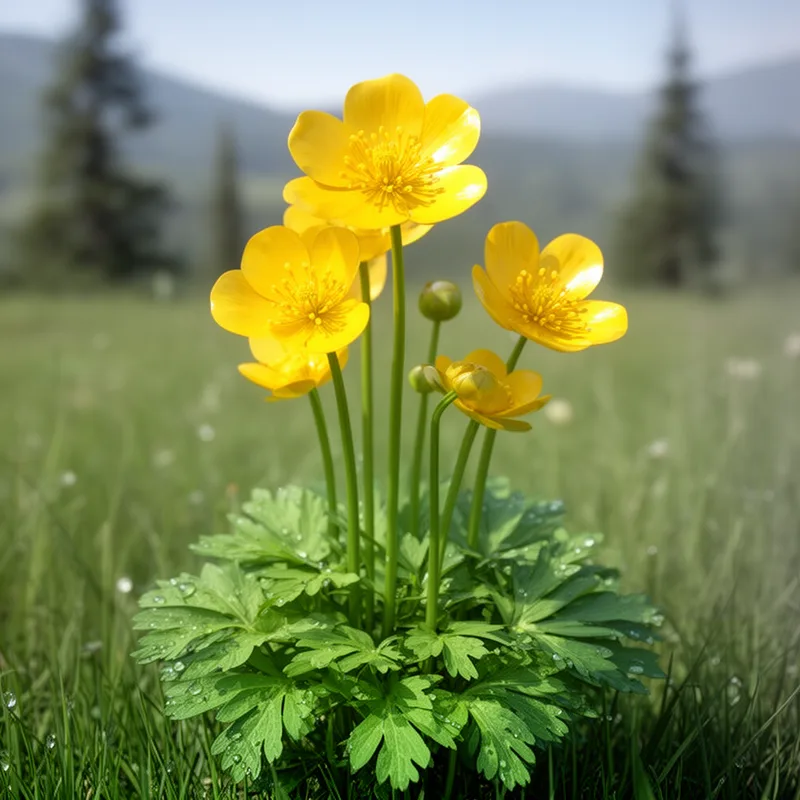
Ranunculus occidentalis
- noun
- /ræˈnʌŋkjələs ɒkˌɪdɛnˈtælɪs/
- Specialized
- The bright yellow blooms of Ranunculus occidentalis make it easy to spot during spring hikes in California.
Examples
-
Ranunculus occidentalis is commonly found in moist meadows throughout the Pacific Northwest.
-
The striking yellow flowers of Ranunculus occidentalis attract many pollinators in its natural habitat.
-
Botanists studied Ranunculus occidentalis to understand its adaptation to different environments.
-
The Ranunculus occidentalis blooms beautifully in the spring.
-
Have you seen a Ranunculus occidentalis flower before?
-
Ranunculus occidentalis is a common sight in the wetlands, showcasing its bright yellow flowers during the spring season.
-
In the rich biodiversity of western North America, Ranunculus occidentalis thrives in damp meadows.
Synonyms

A wildflower from western North America that lives many years and has shiny yellow flowers
Surface Forms
Morphology
Ranunculus + occidentalis
Although this is a Latin scientific name, its structure is transparent: genus name 'Ranunculus' (a buttercup) plus the specific epithet 'occidentalis' (meaning 'western' — cognate with English 'occidental'/'occident'). A learner who knows both constituents can readily infer 'the western Ranunculus' (i.e. a Ranunculus species from the west), so the overall meaning is compositional and predictable.
Etymology
Ranunculus occidentalis comes from Latin words: ranunculus means 'little frog' because buttercups often grow in wet places where frogs live, and occidentalis means 'western'. That's why the name paints a picture of a yellow buttercup found in the western, moist parts of North America.

