
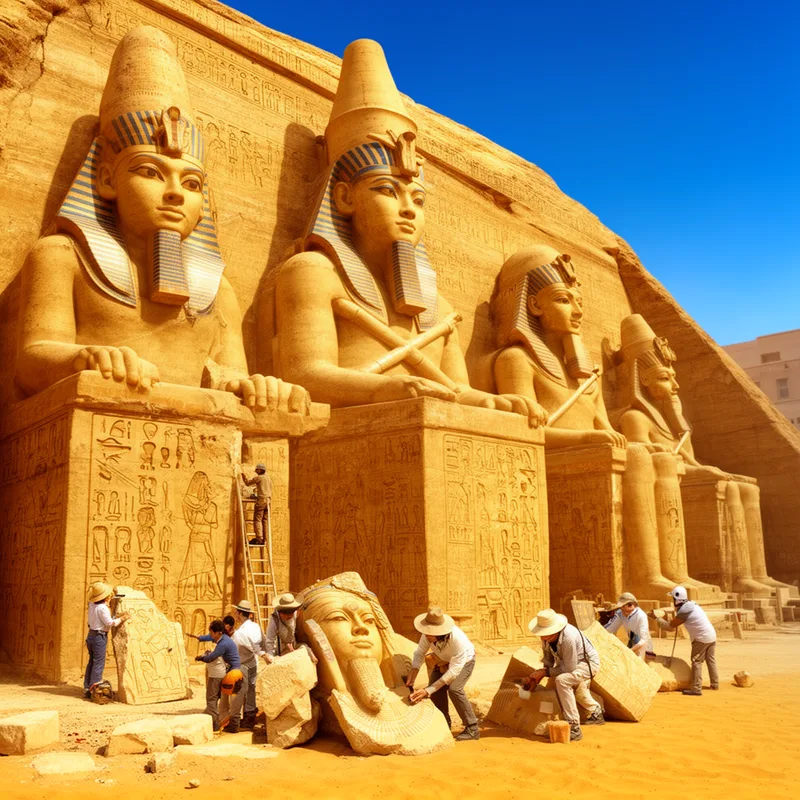
Ramesside
- noun
- /ræˈmɛsaɪd/
- Conventional chronology has it that the Exodus took place somewhere during the Ramesside Period in Egypt, maybe around 1200 BC.
Examples
-
The later Ramesside mummies Siptah and Rameses IV were packed with dried lichen, and Rameses V with sawdust.
Academic text (2003) -
We start the day by exploring the fascinating multi-period site of Elephantine before our final visit of the tour to the island of New Kalabsha, which houses relocated temples from the Ramesside and Roman periods.
Blog text (24) -
They were probably buried in the Delta, where the Ramesside pharaohs had established their capital, and their mummies are unlikely to have survived the wetter conditions there.
Academic text (2003) -
The monuments built during the Ramesside period showcase the remarkable artistry of ancient Egypt.
-
Many historians consider the Ramesside dynasty to be one of the most prosperous times in Egyptian history.
-
Visitors to Egypt often marvel at the temples that date back to the Ramesside era.
Surface Forms
Morphology
Etymology
Ramesside for the period or dynasty is named after the rulers called Ramesses, with -ide meaning 'related to' or 'belonging to', so the Ramesside period is simply the era when pharaohs named Ramesses ruled Egypt.

