
Qumran
 1
9.9
1
9.9

- proper noun
- /ˈkwʊmˌræn/
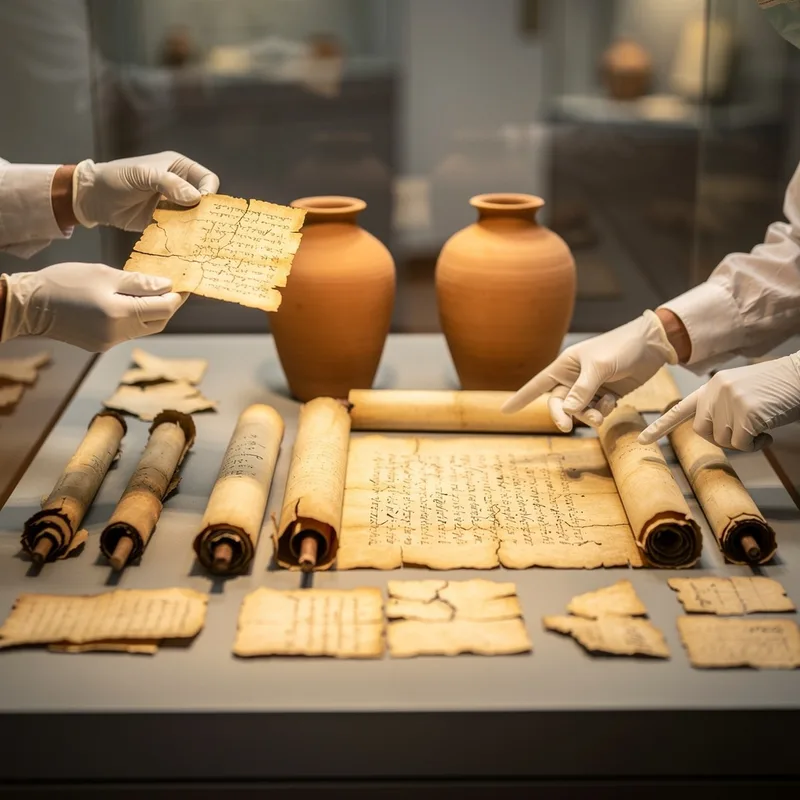
- The Dead Sea Scrolls were discovered in a cave near Qumran, revealing insights into ancient Jewish beliefs.
- Qumran scrolls
Examples
-
Yadin, a prominent proponent of the Qumran-Essene hypothesis, puts off discussing the "major problem" of identifying the authors of the scrolls until the last section of his book.
Academic text (1998) -
Although these secondary sites have yielded very important materials, the term "Dead Sea scrolls" often refers more narrowly to the larger and richer Qumran discoveries.
Academic text (1994) -
Having done this, you may proceed to give it a name, for example, the Qumran Community or the Dead Sea Sect.
Academic text (1998) -
And what the debates about the relation of the Qumran scrolls to early Christianity will conclude is also hard to predict.
Academic text (1994) -
While Lilith is not mentioned again in the Bible, she does resurface in the Dead Sea Scrolls found at Qumran.
Blog text (23) -
This essay takes up a case study from the field of research, known as Qumran studies, that has arisen as a result of the discovery of the Dead Sea Scrolls some fifty years ago.
Academic text (1998) -
The controversies about the publication of the Qumran scrolls reopened the debate about their relation to Christianity—modern and ancient.
Academic text (1994) -
The most obvious and important "new" is the flood of competent studies of unpublished and published Qumran texts that are appearing in scholarly journals, collections of papers given at conferences, and volumes honoring distinguished scholars.
Academic text (1994) -
Although many scholars accepted the hypothesis that the scrolls from Qumran Cave 1 were part (indeed the core) of the library of an Essene community who lived at the site, a few doubted the antiquity of the Qumran scrolls, assigning them to the Middle Ages.
Academic text (1994) -
Researchers have uncovered numerous artifacts from the ancient community at Qumran, enriching our understanding of their lifestyle.
Synonyms
 2
6.1
2
6.1
A group of ancient Hebrew and Aramaic writings found in caves near the Dead Sea
Surface Forms
Etymology
Qumran used for the ancient manuscripts takes its name from the place where they were found, so calling the scrolls the 'Qumran' texts links those writings to the caves and the small Jewish community by the Dead Sea.