
Quinnipiac


 1
9.9
- proper noun
- /ˌkwɪnɪˈpɪæk/
- New Haven Harbor (Fig. 46), fed by the Quinnipiac River, is about 5 km long and has mostly a hard sand-gravel-shell bottom.
- Quinnipiac River
Examples
-
In 1888, Rowe constructed the largest oyster house on the banks of the Quinnipiac River.
Academic text (1996) -
Shell heaps along the banks of the Quinnipiac River showed that American Indians harvested oysters there, as did the earliest settlers from Europe.
Academic text (1996) -
Please locate those and we are going to be studying the Quinnipiac River today.
-
PHOTO (BLACK & WHITE): Figure 51. -- A 50-bushel dugout canoe on the Quinnipiac River.
Academic text (1996) -
When crews took in market oysters from the beds, they usually put them overboard in the Quinnipiac River to "give them a drink" (allow them to pump in brackish water for several hours).
Academic text (1996) -
PHOTO (BLACK & WHITE): Figure 12A. A two-masted sailing sharpie and dugout canoes being sculled on the Quinnipiac River, Conn.
Academic text (1996) -
He had hiked all over the mountain, smelling pine, catching sight of white-tailed deer, drinking from the Quinnipiac River, and wading in its streams in the summertime.
Fiction book (2001) -
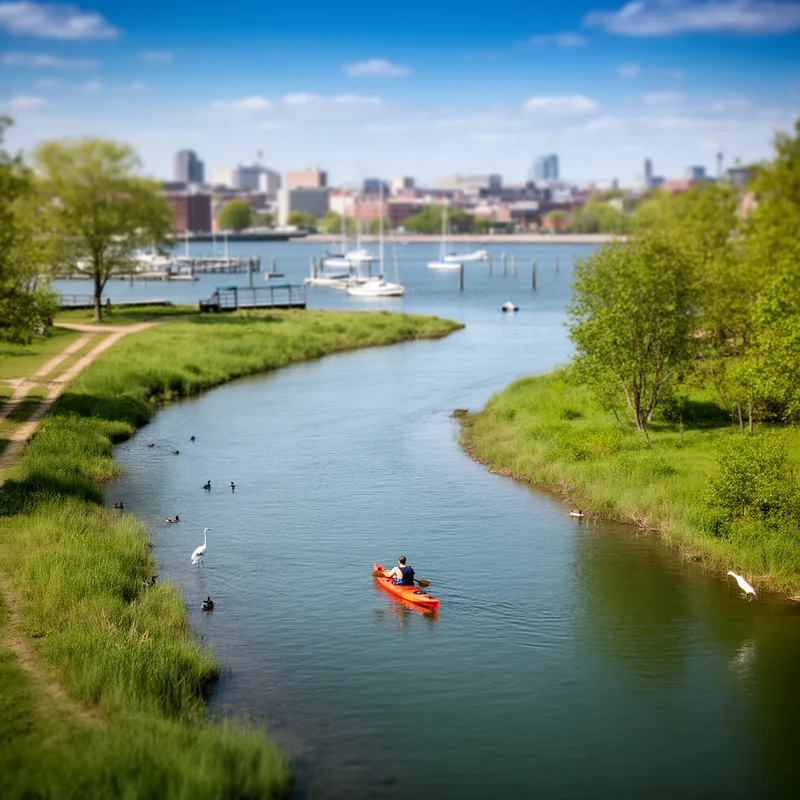
We took a canoe trip on the Quinnipiac River to enjoy the beautiful scenery.
-
The Quinnipiac River is known for its rich history and diverse wildlife.
-
Many residents enjoy recreational activities along the banks of the Quinnipiac River.
Surface Forms
Etymology
Quinnipiac comes from a Native American word that means 'long water' or 'long tidal river', so it is an easy name to remember for the river that flows into New Haven Harbor.