
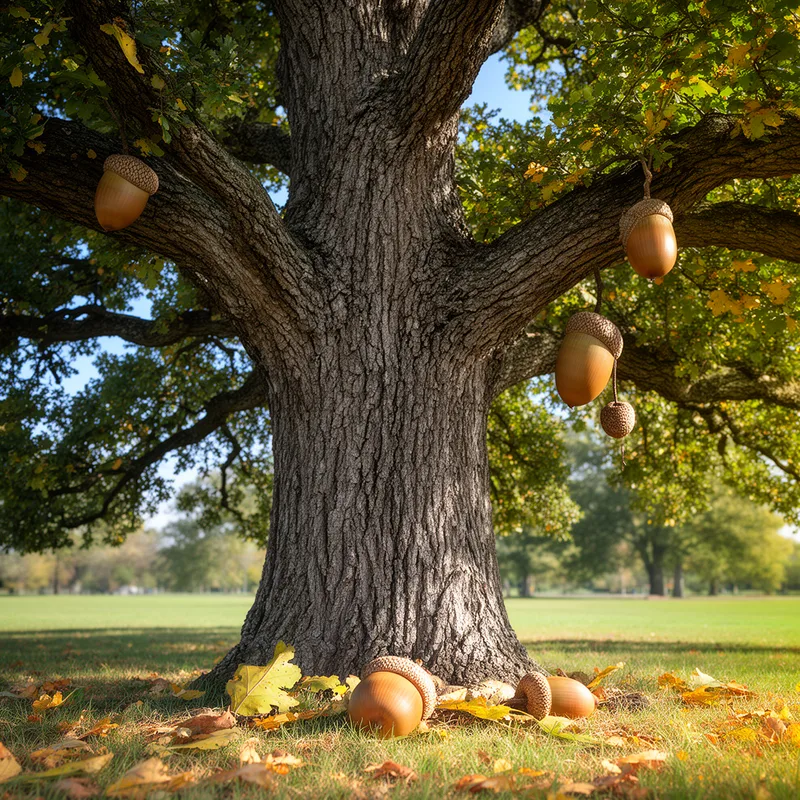
Quercus macrocarpa
- noun
- /ˈkwɜrkəs ˌmækroʊˈkɑrpə/
- Specialized
- The Quercus macrocarpa is commonly known as the bur oak.
Examples
-
In the park, several mature Quercus macrocarpa provide deep shade in the summer.
-
The Quercus macrocarpa is valued for both its ornamental beauty and its hardy wood.
-
Many wildlife species feed on the distinctive acorns produced by Quercus macrocarpa.
-
Many Quercus macrocarpas can be found in the Midwest.
-
The Quercus macrocarpa tree can grow to be quite large, providing ample shade in parks.
-
In some regions, the Quercus macrocarpa is valued for its durable wood, making it a popular choice for furniture.
-
The distinctive acorns of the Quercus macrocarpa feature large, frilled cups that are attractive to wildlife.
Synonyms

A medium to large North American tree with acorns in deep fringed cups

A large tree with leaves that fall in winter and big acorns in mossy cups

A large oak tree from central and eastern North America with thick bark and fringed acorn cups
Surface Forms
Morphology
Quercus + macrocarpa
The name is compositionally predictable in taxonomy (Quercus = oak; macrocarpa literally = 'large-fruited'), so if a learner actually knew both elements they could infer it denotes an oak with large fruit. However, this is a technical Latin binomial rather than a normal English phrase and the species element is not a familiar English word, so the meaning is only partially transparent to an average B1 learner.
Etymology
Quercus macrocarpa comes from Latin words: Quercus means 'oak' and macrocarpa means 'large fruit'. This gives the image of an oak with very large acorns, so the name points to a large oak tree known for its big acorns.

