

Quercus laurifolia
- noun
- /ˈkwɜrkəs lɔːrɪˈfoʊliə/
- Specialized
- Many parks in Florida feature mature Quercus laurifolia trees providing shade and habitat for wildlife.
Examples
-
The Quercus laurifolia is well adapted to swampy areas and urban landscaping in the southeastern United States.
-
Botanists value Quercus laurifolia for its resilience and distinctive laurel-like foliage.
-
The Quercus laurifolia is often found near wetlands.
-
Many parks in Florida feature the Quercus laurifolia.
-
The Quercus laurifolia grows abundantly in the wetland areas of Florida.
-
In southern gardens, the Quercus laurifolia provides impressive shade during the summer months.
-
Due to its adaptability, the Quercus laurifolia is a popular choice for landscape designers in the southeastern U.S.
Synonyms
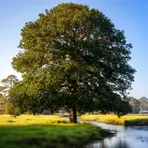
A tree that grows in the southern United States with shiny leaves like a laurel
Surface Forms
Morphology
Quercus + laurifolia
This is a botanical Latin binomial: Quercus indicates the oak genus but 'laurifolia' is not an English word and its Latin parts ('lauri' = laurel, 'folia' = leaves) are unlikely to be known by a B1 learner. Although the name is systematically compositional in botanical Latin, understanding the meaning ('laurel‑leaved oak') requires specialized knowledge of Latin/botanical morphology, so it is not derivable by an average B1 learner.
Etymology
Quercus laurifolia comes from Latin words: Quercus means 'oak' and laurifolia means 'laurel-leaf', because its leaves look like those of a laurel. That's why people call it the 'laurel oak' and you can remember it as an oak with laurel-like leaves that stays green much of the year.

