
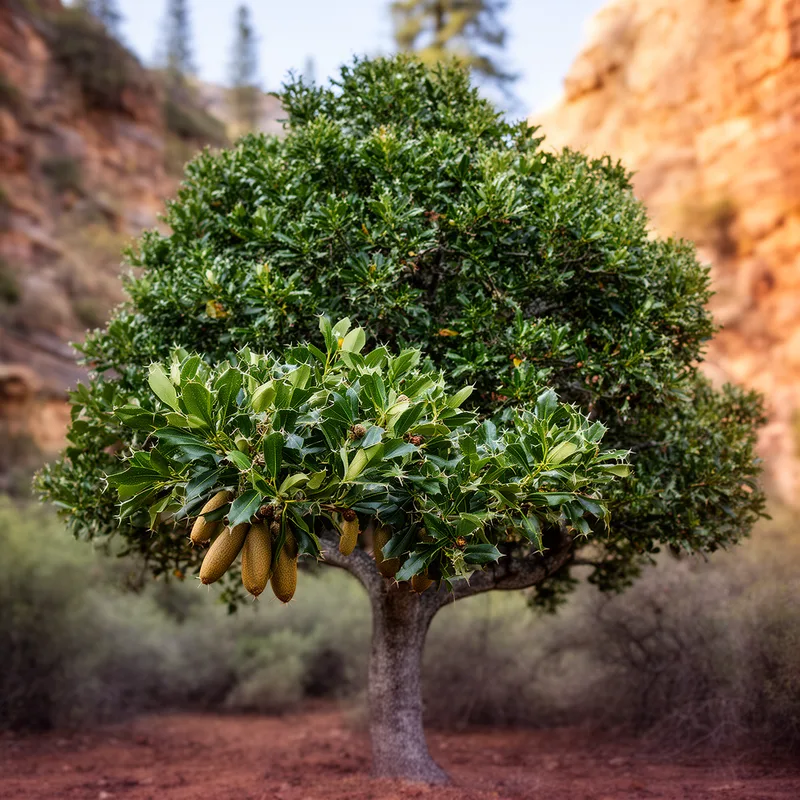
Quercus chrysolepis
- noun
- Specialized
- The leaves of the Quercus chrysolepis are thick and often have spiny edges.
Examples
-
The acorns of Quercus chrysolepis provide food for many animals in the region.
-
The Quercus chrysolepis thrives in dry, rocky soils.
-
Researchers studied the distribution of Quercus chrysolepis in the canyon ecosystem.
-
Have you seen a Quercus chrysolepis tree before?
-
The acorns of Quercus chrysolepis provide food for many animals in the region.
-
Researchers studied the distribution of Quercus chrysolepis in the canyon ecosystem.
-
The leaves of the Quercus chrysolepis are thick and often have spiny edges.
Synonyms

A medium-sized evergreen oak tree with leathery spiny-edged leaves that grows in dry canyons in southwestern US and northwestern Mexico

A medium evergreen tree that makes acorns and has long oval leathery leaves with spiny edges

A medium-sized evergreen tree with oblong, leathery leaves that often have spiny edges and grows in dry southwestern North America
How Big


Surface Forms
Morphology
The binomial combines Quercus (the oak genus) with Chrysolepis (evergreen trees/shrubs), so a learner who knows both constituents can infer this refers to an oak that is evergreen. Binomial scientific naming is a regular compositional pattern, so the core meaning (an evergreen oak species) is directly derivable from the parts.
Etymology
Quercus chrysolepis gets its name from old Greek words: chryso meaning 'gold' and lepis meaning 'scale', because the tree's acorn cups and the undersides of its leaves have tiny golden hairs that look like little scales. That's why the name refers to this medium evergreen oak with thick, sometimes spiny leaves.