
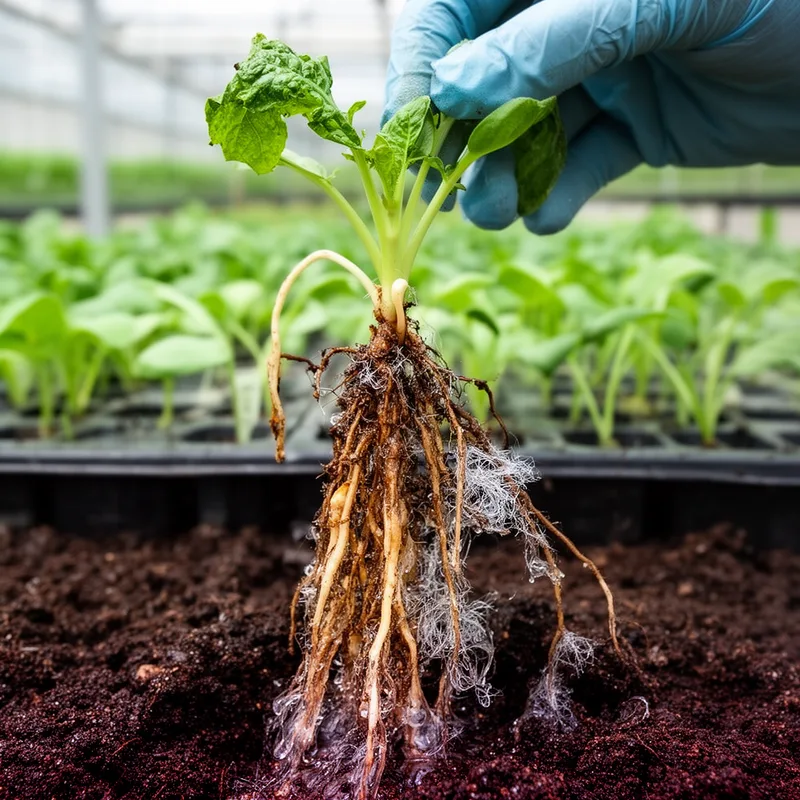
Pythium
- noun
- /ˈpɪθiəm/
- Specialized
- Farmers often treat their plants with fungicides to control Pythium infections and prevent root diseases.
- Pythium root rot
- Pythium root
Examples
-
Cook notes that these practices also help control Pythium root rot, Rhizoctonia root rot, and other serious wheat diseases.
Academic text (1995) -
Pythium root rot was diagnosed by the plant disease laboratory.
Academic text (1998) -
Plant 21 died of what may have been Pythium root rot on February 20, 1994.
Academic text (1998) -
There were eight days of 90-degree temperatures in June, so he wasn't surprised that in some plots, root Pythium appeared in up to 60 percent of the grass.
Academic text (1997) -
A: That's a fungal disease called Pythium mold, also called southern blight and cottony blight.
Blog text (10) -
It has been shown that Pythium and Phytophthora root rots can indeed be controlled most effectively in composted bark-amended container media.
Academic text (2000) -
Unfortunately, effective fungicides for control of R. solani destroy some of the biocontrol agents responsible for the naturally suppressive effects on species of Phytophthora and Pythium.
Academic text (2000) -
The diagnosis of Pythium root rot confirmed the farmer's concerns about his dying crops.
-
Proper drainage in soil is essential to minimize the risk of Pythium outbreaks in young plants.
Compounds

- Specialized
A fungus that makes young plants in nurseries and greenhouses wilt and die
Surface Forms
Etymology
Pythium comes from an old Greek word linked to 'decay' or 'rot', so a helpful way to remember the name is that it is about rotting. That's why Pythium today refers to tiny organisms that attack plant roots and cause them to rot.

