
Purkinje
- proper noun
- /pərˈkɪnʤi/
- Specialized
- As night falls, the Purkinje effect makes it harder to see red traffic signs clearly.
Examples
-
The Purkinje effect is fascinating.
-
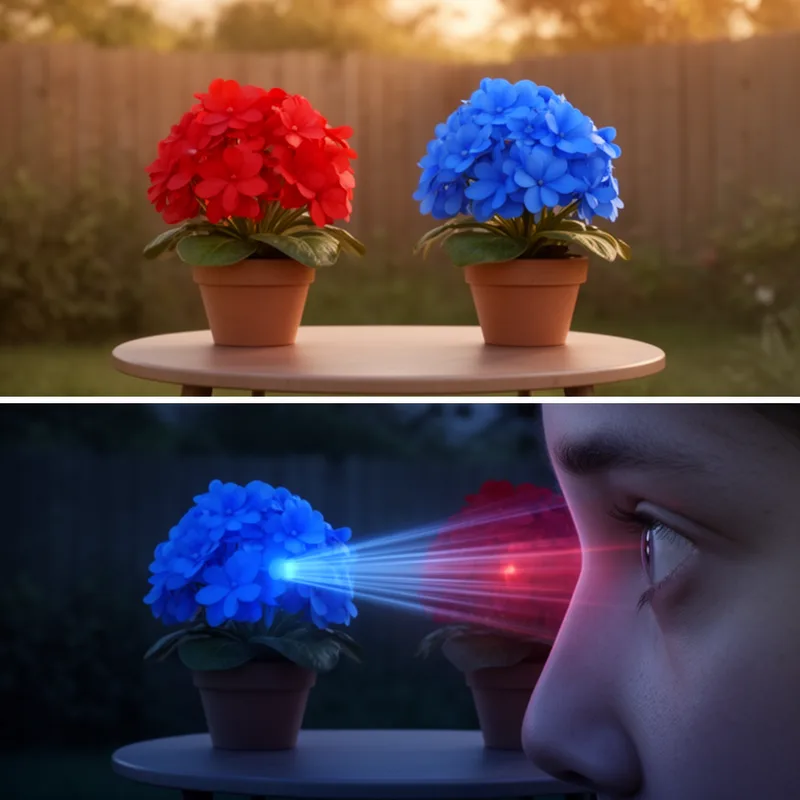
The Purkinje phenomenon explains why blue flowers seem brighter than red ones at dusk.
-
Scientists study the Purkinje shift to understand how our eyes adapt to darkness.
-
Did you see the Purkinje effect?
-
The Purkinje phenomenon explains why blue objects appear more vibrant in dim light.
-
During twilight, the Purkinje effect reveals that blue hues are more noticeable than red.
-
Understanding the Purkinje shift can enhance your awareness of color sensitivity in low light.
Compounds

- Specialized
A large brain cell with many branch-like parts that sends signals in the part of the brain that controls movement

- Specialized
A special heart muscle cell that carries electrical signals through the lower heart chambers

- Specialized
A network of special heart fibers that carry electrical signals to make the heart's lower chambers contract
Surface Forms
Etymology
Purkinje comes from the Czech scientist Jan Evangelista Purkyně, who noticed that as light gets dim blue objects can look brighter than red ones. So the Purkinje shift or effect is the change in how bright colours look when light becomes low.

