
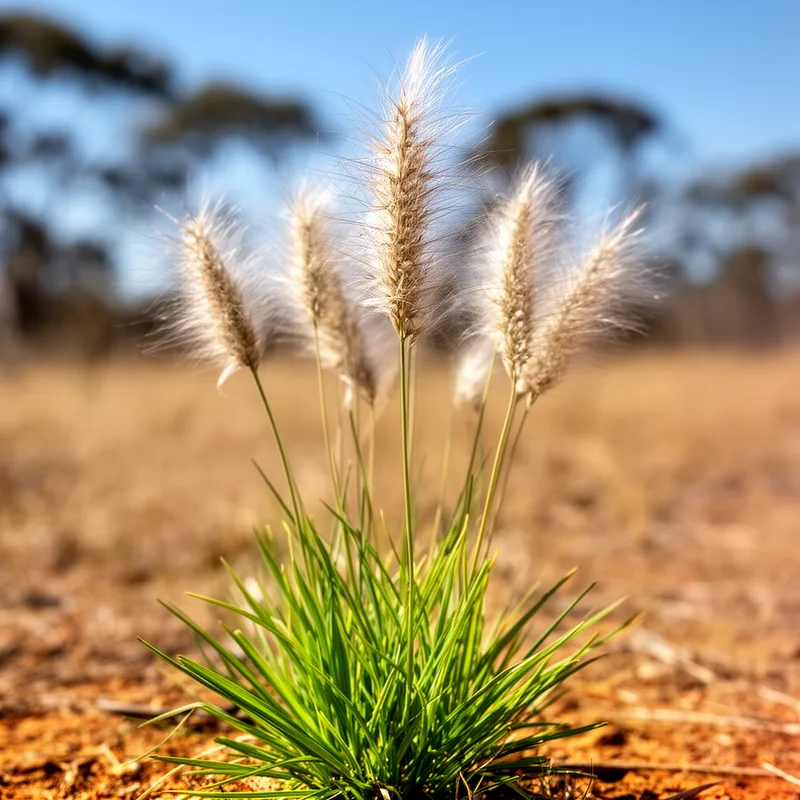
Pteropogon humboltianum
- noun
- Specialized
- The feathery fruits of Pteropogon humboltianum are easily dispersed by the wind.
Examples
-
Farmers sometimes mistake Pteropogon humboltianum for a common weed due to its grass-like appearance.
-
Botanists discovered a new population of Pteropogon humboltianum in southern Australia.
-
The Pteropogon humboltianum is a unique plant found in southern Australia.
-
Have you seen the Pteropogon humboltianum in bloom?
-
The feathery hairs of Pteropogon humboltianum help its fruits to float in the breeze.
-
Discovering Pteropogon humboltianum in its native habitat provides valuable insights into Australia's biodiversity.
-
Due to its distinct feathery fruits, Pteropogon humboltianum is an interesting subject for botanical studies.
Synonyms
A southern Australian plant with feathery hairs around its fruit
Surface Forms
Morphology
pteropogon + humboltianum
This is a Latin binomial (scientific) name rather than a normal English multiword expression, so its meaning depends on taxonomic naming conventions and specialist botanical knowledge rather than ordinary compositional semantics. One constituent is not a standard dictionary word and the other is technical, so a B1 learner who knows everyday English words would not be able to derive the plant meaning from the parts.
Etymology
Pteropogon humboltianum comes from Greek words and a person's name. The parts ptero meaning 'wing' and pogon meaning 'beard' give the picture of a 'winged beard' around the fruit. The 'humboltianum' part honors the explorer Humboldt, so the name helps you remember this grass has feathery hairs that the wind can carry.

