
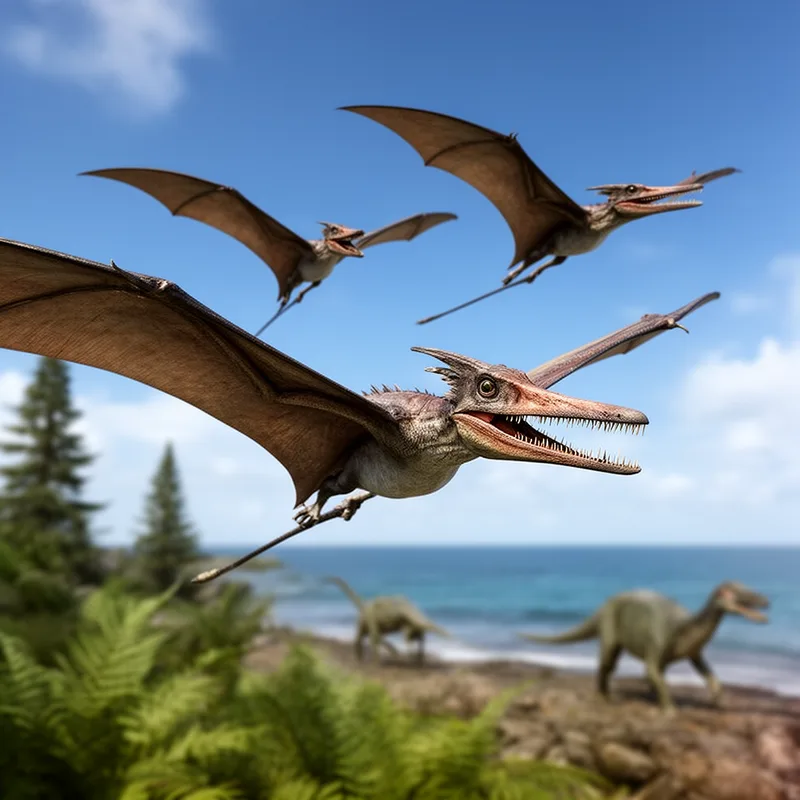
Pterodactylidae
- noun
- /ˌtɛrəˈdæktɪˌliːdeɪ/
- Specialized
- The Pterodactylidae are known for their long, slender wings and toothed beaks.
Examples
-
Many fossils of Pterodactylidae have been discovered in Europe.
-
Scientists debated whether new finds should be classified within Pterodactylidae or a separate family.
-
Fossils belonging to the Pterodactylidae family have been discovered on several continents.
-
The Pterodactylidae family includes some of the most fascinating prehistoric creatures.
-
Fossils belonging to the Pterodactylidae family have been discovered on several continents.
-
Scientists debated whether new finds should be classified within Pterodactylidae or a separate family.
-
The Pterodactylidae are known for their long wings and unique flying abilities.
Synonyms
 27
9.7

A flying reptile from long ago with a long thin head and short tail
A group of extinct animals with wings that could fly
Surface Forms
Morphology
Pterodactylidae = pterodactyl (semi-transparent) = pterodactyl + idae
Formed from 'pterodactyl' plus the scientific family suffix '-idae'; the relation to the base is direct but '-idae' is a technical taxonomic marker that may be unfamiliar to general learners.
Etymology
Pterodactylidae comes from Greek parts: ptero- meaning 'wing', -dactyl- meaning 'finger', and -idae meaning 'family'. So Pterodactylidae literally means the 'wing-finger family', which helps you remember this group of extinct flying reptiles whose wings were supported by a very long finger.