
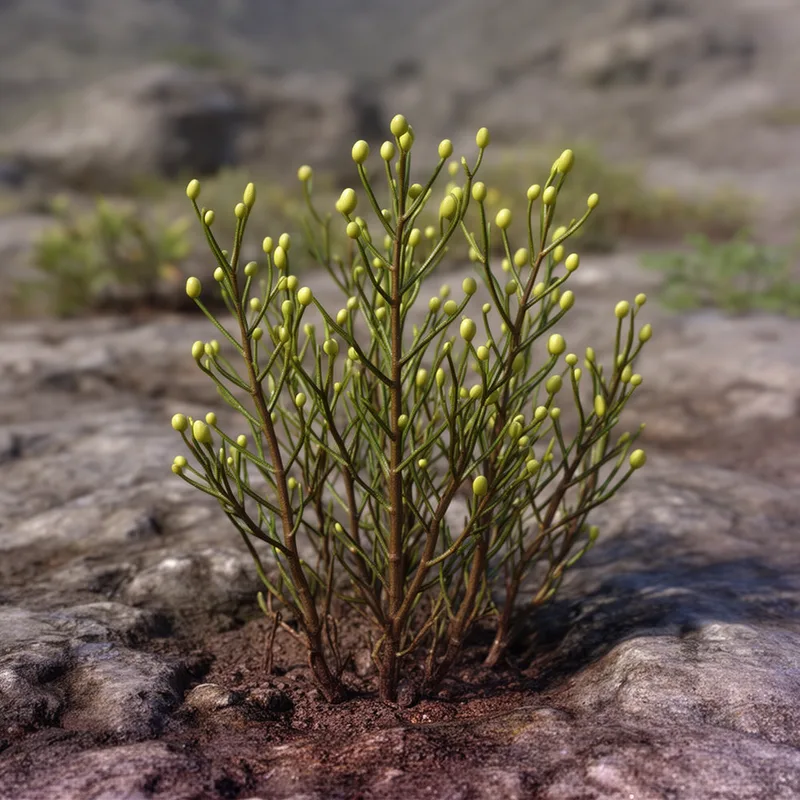
Psilophyton


 1
9.9
- noun
- /ˌsaɪləˈfaɪtən/
- Specialized
- The stems of Psilophyton were wiry and branched, with sporangia at the tips.
Examples
-
Fossils of Psilophyton have provided crucial insights into early plant evolution.
-
Researchers discovered a new species within the Psilophyton genus in a Devonian rock formation.
-
The Psilophyton is considered a primitive plant.
-
Many fossils of Psilophyton have been discovered.
-
The Psilophyton is an ancient plant that thrived during the Paleozoic era.
-
Fossils of Psilophyton show their unique underground rhizomes and sporangia.
-
Researchers study Psilophyton to understand the evolution of early land plants.
Surface Forms
Etymology
Psilophyton comes from Greek parts psilo- meaning 'bare' and phyton meaning 'plant'. So Psilophyton literally means a 'bare plant', a good image for these ancient, leafless plants with smooth stems and spore cases at their tips, which is why the name fits the fossils.