

Pseudolarix amabilis
- noun
- Specialized
- The Pseudolarix amabilis is prized in gardens for its striking golden foliage in autumn.
Examples
-
During fall, the Pseudolarix amabilis turns a stunning golden yellow.
-
Unlike true larches, Pseudolarix amabilis cones disintegrate at maturity rather than falling whole.
-
Botanists were excited to discover a mature Pseudolarix amabilis in the remote mountains of China.
-
The Pseudolarix amabilis is often admired for its beautiful autumn foliage.
-
Gardeners love the Pseudolarix amabilis for its gorgeous golden leaves in autumn.
-
The unique form of Pseudolarix amabilis makes it a popular choice for landscaping projects.
-
In late autumn, the Pseudolarix amabilis transforms into a brilliant yellow, attracting many visitors.
Synonyms
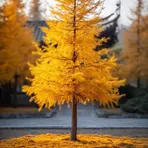
A Chinese tree like a larch with bright yellow leaves in autumn
Surface Forms
Morphology
Pseudolarix + amabilis
This is a Latin scientific name (genus + species) rather than a compositional English phrase; the second element 'amabilis' is not an English lexical item (not found in the dictionary) and the label functions as a proper noun for a species. Knowing the parts does not allow a B1 learner to infer the everyday meaning 'a species of deciduous conifer with golden autumn leaves' without specialist botanical knowledge, so the expression is not transparently interpretable.
Etymology
The name Pseudolarix amabilis comes from old words: pseudo meaning 'false', larix meaning 'larch', and amabilis meaning 'lovely'. So the name means a 'lovely false larch' — a tree that looks like a larch but is different and is often called the 'golden larch' because its leaves turn bright yellow in autumn.

