
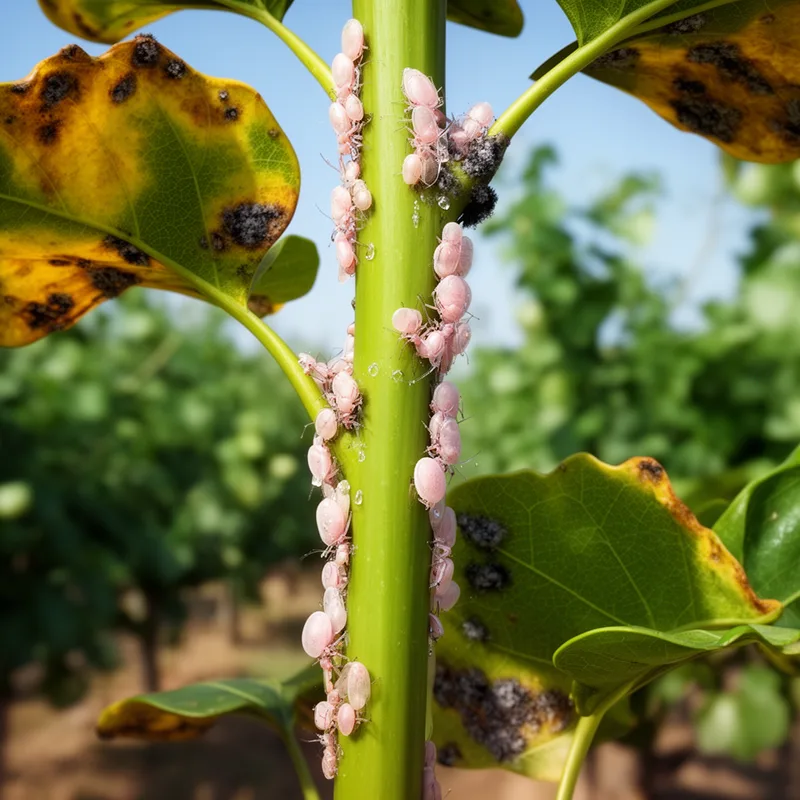
Pseudococcidae


 1
9.9
- noun
- /ˌsuːdoʊˈkɒkɪdeɪ/
- Specialized
- Farmers need to monitor for Pseudococcidae infestations to protect their harvests.
Examples
-
The riboflavin biosynthesis gene (ribD) was transferred horizontally from a bacterium in the class of Alphaproteobacteria to the ancestor of Pseudococcidae mealybugs.
Academic text (2018) -
The Pseudococcidae are often found on crops, where they can cause significant damage to plants.
-
The presence of Pseudococcidae in the greenhouse indicated a potential threat to the plants.
Synonyms
 1
9.9
Small soft insects called mealybugs that feed on plant sap and often damage crops
Compounds
- Specialized
1
9.9
Small soft insects called mealybugs that feed on plant sap and often damage crops
Surface Forms
Morphology
Pseudococcidae = Pseudococcus (opaque) = Pseudococcus + idae
The word is a specialized taxonomic family name formed from the genus name 'Pseudococcus' plus '-idae', which is not transparently recoverable for most learners.
Etymology
Pseudococcidae comes from the parts pseudo- meaning 'false' and cocc- meaning 'berry'. It is the family name for mealybugs, small round soft insects that look like little white berries on plants, so the name helps you remember them as 'false berries'.