
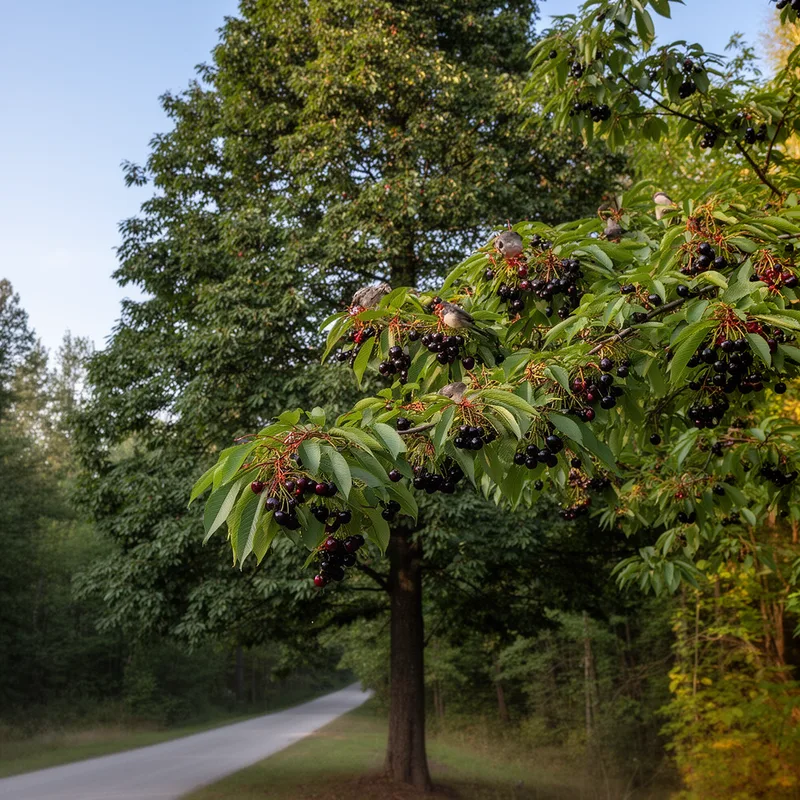
Prunus serotina
- noun
- /ˈpruːnəs səˈroʊtɪnə/
- Specialized
- In the fall, the Prunus serotina produces small, round black cherries that some people enjoy.
Examples
-
The wood of Prunus serotina is prized for furniture making.
-
Many birds feed on the fruit of the Prunus serotina in autumn.
-
Prunus serotina can sometimes be found along forest edges and roadsides.
-
Many birds enjoy the fruit of the Prunus serotina.
-
Did you know that the Prunus serotina produces sour cherries?
-
During the summer, the Prunus serotina blossoms attract numerous pollinators.
-
The Prunus serotina tree provides shade in parks and is often found in many backyards.
Synonyms
 1
3.0
1
3.0

A small dark red to almost black round fruit from a tree that tastes sweet
A large North American tree that has small black sour fruit people can eat

A large North American cherry tree with dark sour fruit and strong wood
How Edible


Surface Forms
Morphology
This is a standard Linnaean binomial composed of a genus name ('Prunus') plus a specific epithet ('serotina'), so its meaning as a species of Prunus (a type of wild cherry tree) is directly derivable from the constituents. Scientific naming conventions are cross-linguistically regular, so a learner who knows the provided constituent definitions can infer the MWE refers to that particular tree species.
Etymology
Prunus serotina comes from Latin words that describe the tree. Prunus means 'plum' or 'cherry' and serotina means 'late', so the name tells us it is a 'late' cherry tree that flowers and fruits later in the year.