

Prunus ilicifolia
- noun
- Specialized
- The leaves of Prunus ilicifolia are thick and spiny, resembling those of holly.
Examples
-
Many birds are attracted to the fruit of Prunus ilicifolia in the wild.
-
Gardeners often plant Prunus ilicifolia for its drought resistance and ornamental value.
-
The Prunus ilicifolia thrives in California's coastal regions.
-
Many gardeners appreciate the Prunus ilicifolia for its ornamental value.
-
The fruit of the Prunus ilicifolia is edible and often enjoyed by people in California.
-
In California's parks, many visitors admire the beautiful white flowers of the Prunus ilicifolia tree.
-
The Prunus ilicifolia is known for its leathery leaves, making it a popular choice for drought-resistant gardens.
Synonyms
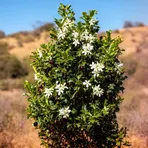
An evergreen shrub or small tree with spiny leathery leaves and white flowers from California
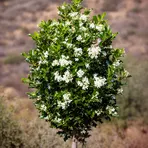
A small evergreen shrub or tree with spiny leaves and white flowers

A small tree or shrub with spiny leaves that stay green all year and white flowers

An evergreen shrub or small tree from Catalina Island that produces small dark red edible fruit

A California evergreen tree with white flowers and small plum fruits
Surface Forms
Morphology
Prunus + ilicifolia
The binomial is compositional: 'Prunus' names the genus (trees/shrubs including plums) and 'ilicifolia' is a Latin epithet that literally means 'holly‑leaved' (ilex + folia). A learner who knew both constituents could infer it is a Prunus with holly‑like leaves, but the specific epithet is specialized botanical Latin rather than everyday English, so understanding depends on niche morphological/Latin knowledge and is only partially transparent.
Etymology
Prunus ilicifolia comes from Latin words: Prunus means 'plum' and ilicifolia means 'holly-leaved' or 'leaf like a holly'. The name paints a simple picture of a plum-like plant with thick, spiny leaves, which explains why it is an evergreen shrub with edible, plum-like fruit.

