
Prunus dasycarpa
- noun
- Specialized
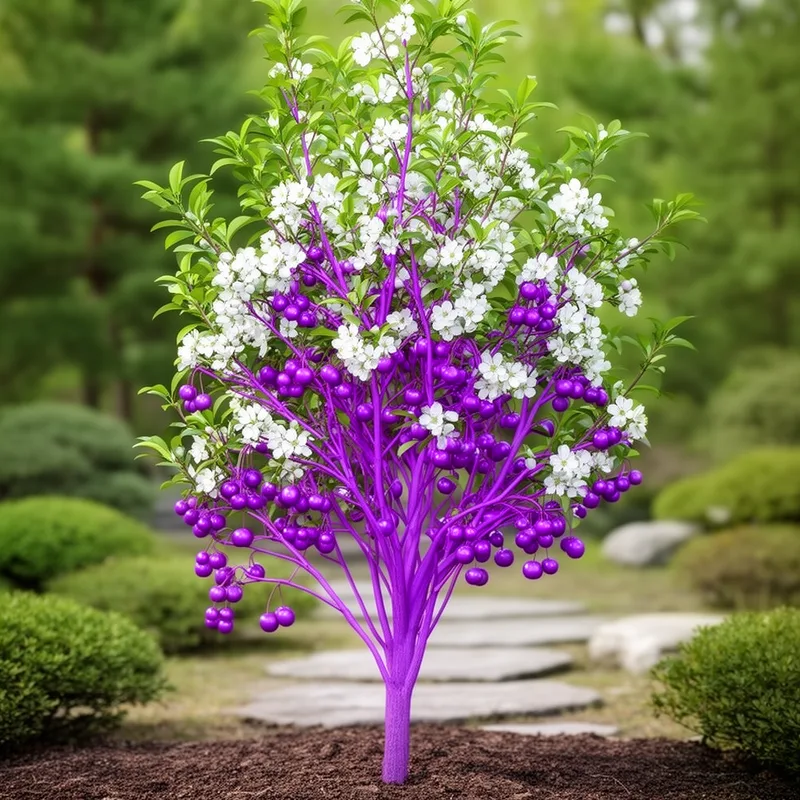
- The Prunus dasycarpa is often grown in botanical gardens for its unusual purple twigs and white blossoms.
Examples
-
Horticulturists study Prunus dasycarpa to understand hybridization between apricot species.
-
I planted a Prunus dasycarpa in my garden last year.
-
Despite its attractive appearance, the fruit of Prunus dasycarpa is considered inferior compared to other apricots.
-
The Prunus dasycarpa tree produces beautiful white flowers in spring.
-
The Prunus dasycarpa tree produces beautiful white flowers in spring.
-
Despite its attractive appearance, the fruit of Prunus dasycarpa is considered inferior compared to other apricots.
-
I planted a Prunus dasycarpa in my garden last year.
Synonyms

A small apricot tree from Asia that makes purple fruit

A small fruit tree with purple twigs, white flowers, and purple fruit grown mainly for its looks
Surface Forms
Morphology
Prunus + dasycarpa
This is a taxonomic binomial where 'Prunus' clearly signals the genus (a type of tree), so a learner who knows the constituents would infer it names a species of Prunus. However, 'dasycarpa' is not a standard English word and has no dictionary gloss here, so the specific descriptive meaning (the particular hybrid/apricot traits) is not derivable from the parts alone. The genus component gives partial, predictable information but the species epithet is specialized/opaque, so overall the expression is partially transparent.
Etymology
Prunus dasycarpa may come from the parts Prunus (meaning 'plum') and dasy- + -carpa (literally 'hairy fruit'). So imagine a small plum-like or 'apricot' tree with purple twigs and rough purple fruit, and that picture helps you remember it is a small hybrid apricot tree known for its purple twigs and not very tasty fruit.

