
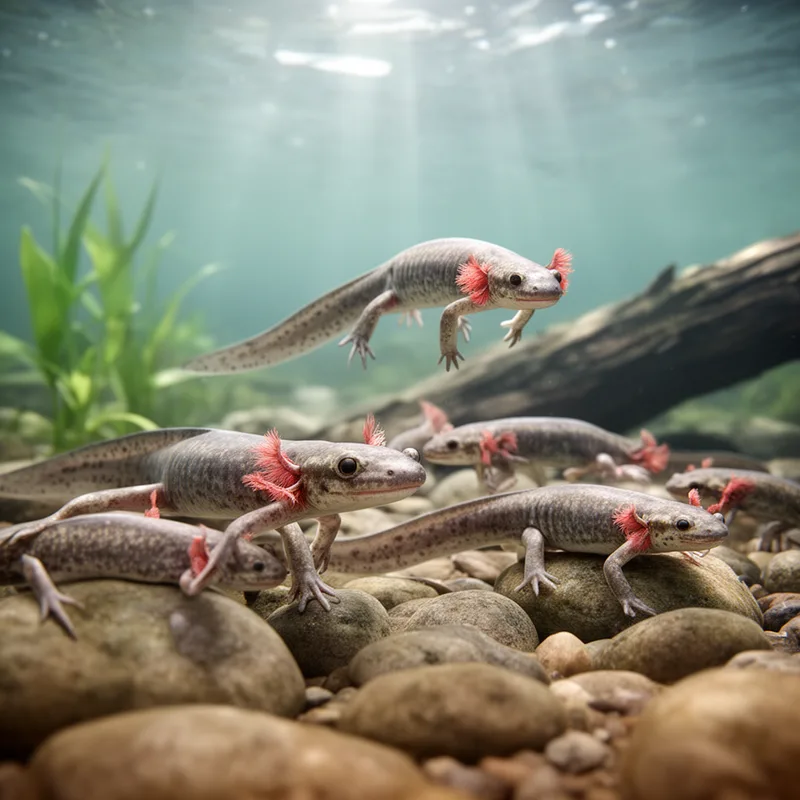
Proteidae
- noun
- /ˈproʊtiˌiːdi/
- Specialized
- Members of the Proteidae family, commonly known as mudpuppies, thrive in freshwater environments.
Examples
-
The Proteidae family includes several species of mudpuppies.
-
Members of the Proteidae family remain aquatic throughout their entire lives.
-
Biologists discovered a new species within the Proteidae in Eastern Europe.
-
The Proteidae are often studied for their unique respiratory systems.
-
Did you know that Proteidae are often found in freshwater habitats?
-
The Proteidae includes various aquatic salamanders that are native to North America.
-
Research on the Proteidae family reveals interesting adaptations for life underwater.
Surface Forms
Morphology
Proteidae = Proteus (opaque) = Prote + idae
Although zoological family names are formally built from a genus name plus '-idae', this scientific naming pattern is not transparent to most learners.
Etymology
Proteidae comes from the Greek sea god Proteus, who could change his shape. The same root is in the English word protean, which means 'changeable', so a helpful way to remember it is to think of these odd, water-living salamanders as linked to a shape-shifting sea god.

