
Proteales
- noun
- /proʊˈtiːeɪliːz/
- Specialized
- The Proteales include both the Proteaceae and Platanaceae families.
Examples
-
Many unique plant species in Australia belong to the Proteales order.
-
Did you know that Proteales include the famous banksia?
-
Recent studies have helped clarify the evolutionary relationships within the Proteales.
-
The Proteales order consists of many unique flowering plants.
-
The Proteales order is known for its distinctive flowers and large diversity of species.
-
Botanists study the Proteales to understand their role in different ecosystems.
-
Many popular garden plants belong to the Proteales, including those from the Proteaceae family.
Synonyms

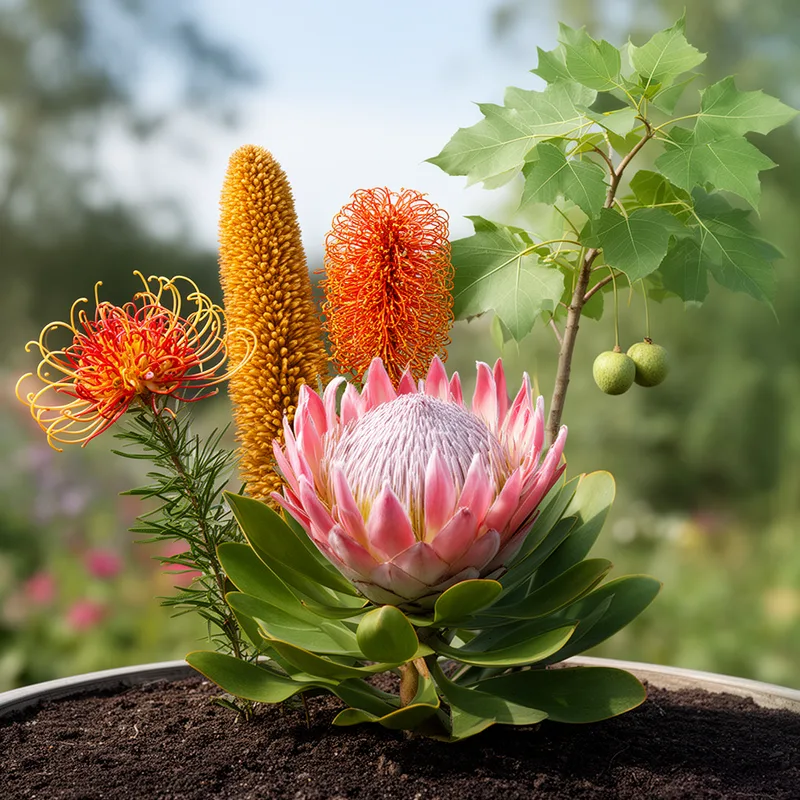
A group of flowering plants that includes proteas and banksias from Australia and South Africa
Compounds
- Specialized
A group of flowering plants that includes proteas and banksias from Australia and South Africa
Surface Forms
Morphology
Proteales = Protea (semi-transparent) = Protea + ales
Formed by adding the standard taxonomic suffix '-ales' to the genus name 'Protea'; the morphological relation is regular but the meaning is technical and likely unfamiliar to an average learner.
Etymology
Proteales comes from the family name Proteaceae, which goes back to the Greek sea-god Proteus, famous for being able to 'change shape'; the ending -ales shows it is a plant order. That's why the name fits: these flowering plants are very varied in form, like something 'protean' or changeable.

