
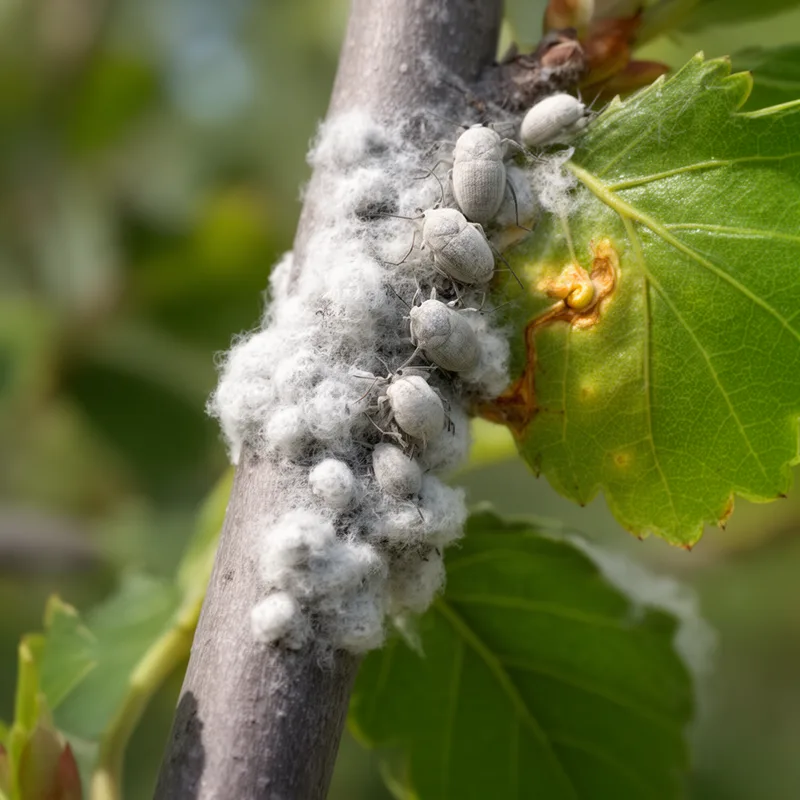
Prociphilus tessellatus
- noun
- Specialized
- The infestation of Prociphilus tessellatus caused a white, woolly appearance on the alder trees in spring.
Examples
-
Gardeners are on alert for Prociphilus tessellatus due to its damaging impact on ornamental alder shrubs.
-
Researchers studied the effect of Prociphilus tessellatus on local alder populations.
-
The Prociphilus tessellatus infests alder trees in the region.
-
Farmers are concerned about Prociphilus tessellatus damaging their crops.
-
Gardeners are on alert for Prociphilus tessellatus due to its damaging impact on ornamental alder shrubs.
-
The infestation of Prociphilus tessellatus caused a white, woolly appearance on the alder trees in spring.
-
Researchers studied the effect of Prociphilus tessellatus on local alder populations.
Synonyms

A small insect with a white, wool-like covering that feeds on alder trees
A small insect that makes a white, cotton-like covering on plants
Surface Forms
Morphology
Prociphilus + tessellatus
This is a scientific Latin binomial (genus + species) composed of technical taxonomic names rather than ordinary English words; a B1 learner who only 'knows' the orthographic constituents cannot derive the meaning 'a species of aphid that attacks alder trees.' The species epithet is not a productive English morpheme and the genus name is specialized, so the overall expression is opaque to learners.
Etymology
Prociphilus tessellatus may come from old words: Prociphilus that suggests a small, wool-like bug and tessellatus meaning 'tiled' or patchy, so the name gives the picture of little white patches on a tree. That's why the name fits the 'alder woolly aphid', an aphid that makes alder branches look white and woolly.

