
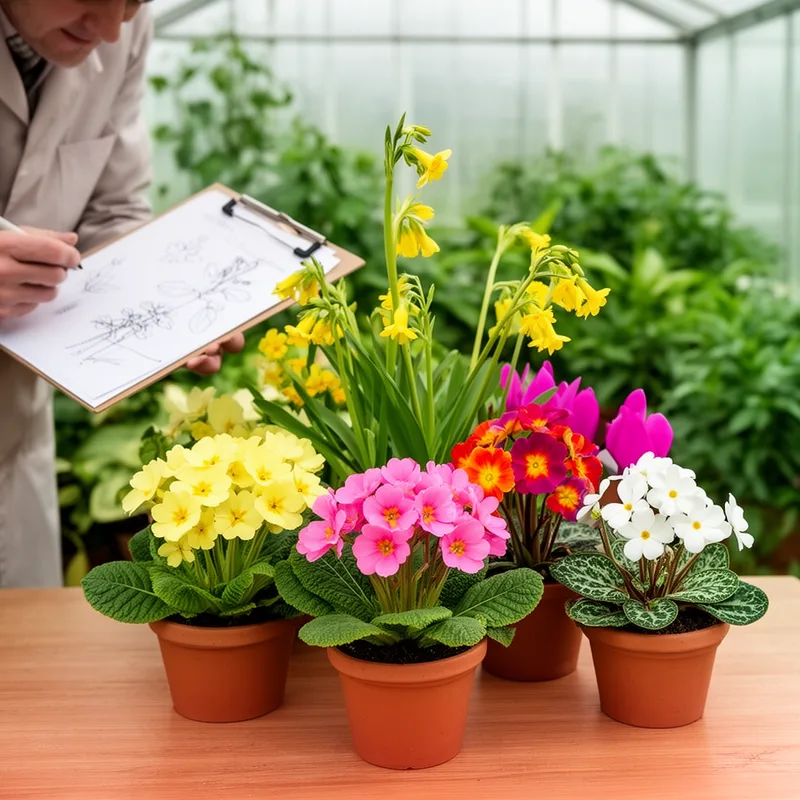
Primulales
- noun
- /ˌprɪmjuˈleɪliz/
- Archaic
- Several species within the Primulales are cultivated for their attractive flowers.
Examples
-
Botanists debated the classification of the Primulales in the light of new genetic evidence.
-
The Primulales were once considered a more extensive order under older taxonomic systems.
-
The Primulales order consists of various flowering plants.
-
Are Primulales commonly found in temperate regions?
-
Many gardeners prefer species from the Primulales family for their vibrant and colorful blooms.
-
Research has shown that plants in the Primulales order can thrive in various soil types.
-
The classification of Primulales has undergone revisions due to advancements in botanical studies.
Synonyms

A group of flowering plants that includes primrose and similar families
Compounds
- Archaic
A group of flowering plants that includes primrose and similar families
Surface Forms
Morphology
Etymology
Primulales comes from the plant name Primula, the primrose, and the ending -ales that shows a plant 'order'. The name Primula comes from Latin primus meaning 'first', like the English word 'prime', because primroses are often some of the first flowers in spring, so Primulales is the group of plants that includes primroses and their relatives.

