
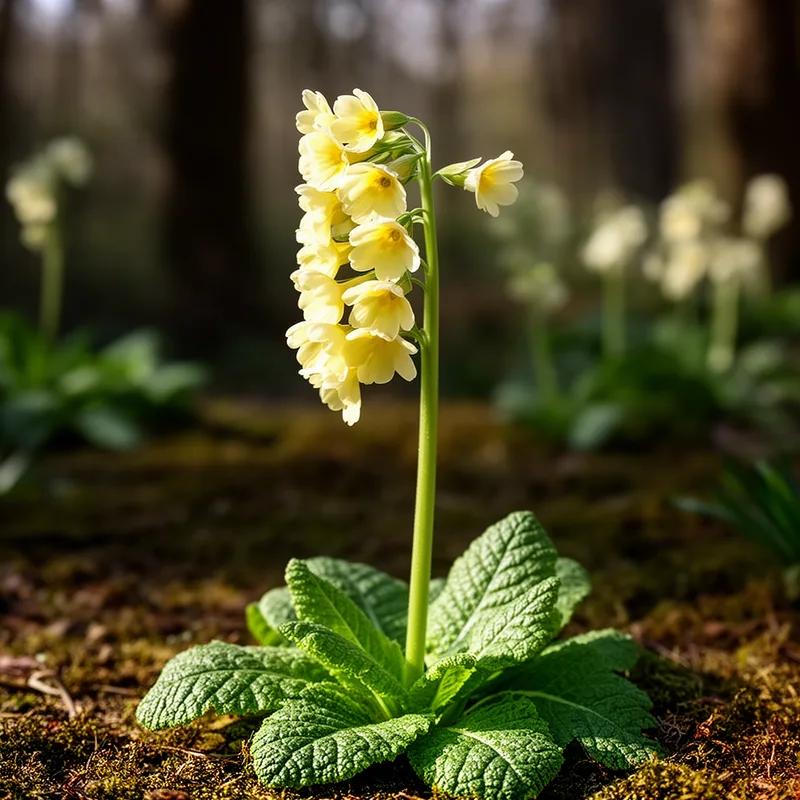
Primula elatior
- noun
- Specialized
- The woodland clearing was dotted with Primula elatior in full bloom.
Examples
-
Gardeners often plant Primula elatior to add color to shaded borders in spring.
-
The Primula elatior blooms beautifully in spring.
-
Botanists identified the pale yellow flowers as Primula elatior during the field survey.
-
Look at the beautiful Primula elatior!
-
Gardeners often plant Primula elatior to add vibrant color to shaded areas in their gardens.
-
The woodland clearing was filled with clusters of Primula elatior, showcasing their pale yellow blooms.
-
During the spring months, Primula elatior brightens up the forest floor with its delicate flowers.
Synonyms


 1
9.9
1
9.9
A wild plant like a primrose with clusters of yellow flowers on one side of the stem
Surface Forms
Morphology
primula + elatior
This is a Latin taxonomic binomial rather than an English compositional phrase: the epithet 'elatior' is not an English word (not found in the dictionary) and the species name 'Primula elatior' denotes a specific plant (oxlip) that is not predictable from the parts. Even if a learner knows 'primula' as a plant genus, the Latin epithet and the convention of species naming make the overall meaning non-compositional and unpredictable for a B1 learner.
Etymology
Primula elatior gets its name from Latin words: primula means 'first' because it blooms early in spring, and elatior means 'taller' because the plant stands a little higher than some other primroses. So the name points to a primrose that flowers early and is a bit taller, which is why gardeners often call it the 'oxlip'.