
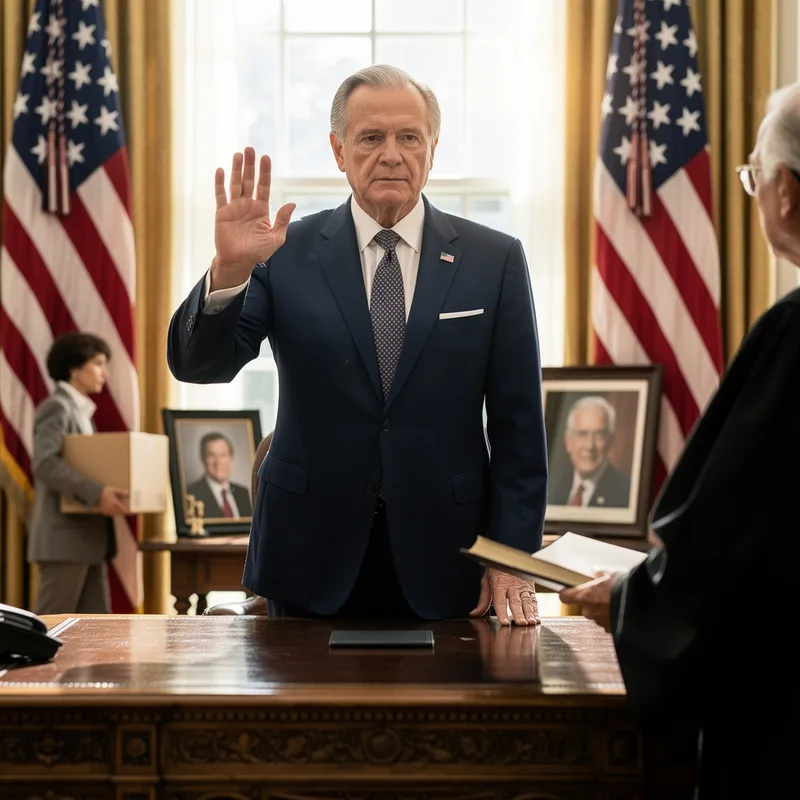
President Ford
 4
4.4
4
4.4

- proper noun
- /ˈprɛzɪdənt fɔrd/
- Many historians credit President Ford with restoring public trust after the Watergate scandal.
- former President Ford
- President Ford's chief of staff
- President Ford gave
Examples
-
President Ford took office following the resignation of Richard Nixon in 1974.
-
The library is named after President Ford and displays artifacts from his presidency.
-
Did President Ford really pardon Richard Nixon?
-
Many historians regard President Ford as an underrated leader.
-
During his presidency, President Ford focused on healing the nation after the Watergate scandal.
-
In 1974, President Ford took office following the resignation of Richard Nixon.
-
Many remember President Ford for his efforts to restore trust in the government.
Synonyms
 4
2.8
4
2.8
An American leader who became the 38th President after Richard Nixon quit


 1
4.8
1
4.8
The 38th President of the United States who served from 1974 to 1977 after Nixon resigned
Surface Forms
Morphology
President + Ford
The phrase is compositionally built: 'President' (the head of state/government) plus the proper name 'Ford' yields a referent who is the president with the surname Ford. A B1 learner who knows both constituents will understand it refers to a president called Ford; however, detailed historical facts (dates, ordinal number) require extra world knowledge and are not derivable from the words themselves.
Etymology
President Ford refers to Gerald R. Ford, who became president when Richard Nixon resigned in 1974. That's why President Ford means the '38th President of the United States', who served from 1974 to 1977 and is remembered for helping to rebuild trust after the Watergate scandal.