
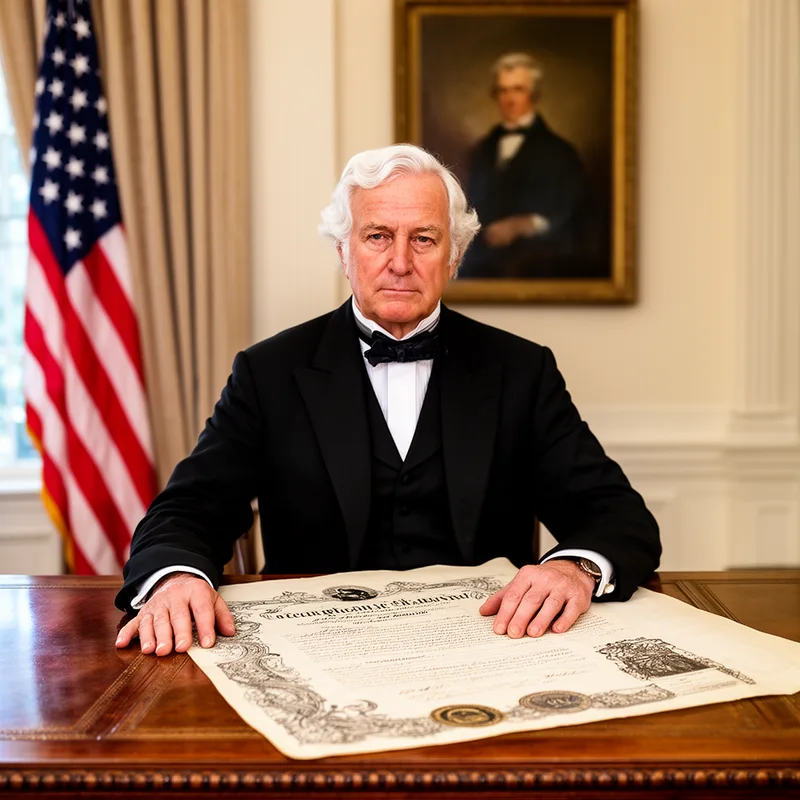
President Fillmore


 1
7.7
- proper noun
- /ˈprɛzɪdənt ˈfɪlˌmɔr/
- During his time in office, President Fillmore signed the Compromise of 1850.
Examples
-
President Fillmore was the last Whig president to serve in the White House.
-
Many historians debate the legacy of President Fillmore in U.S. history.
-
Did President Fillmore support the Compromise of 1850?
-
During his term, President Fillmore faced many challenges.
-
President Fillmore was the last Whig president to serve in the White House.
-
During his time in office, President Fillmore signed the Compromise of 1850.
-
Many historians debate the legacy of President Fillmore in U.S. history.
Synonyms
 2
6.2
The 13th President of the United States who served from 1850 to 1853
Surface Forms
Morphology
President + Fillmore
This is a straightforward title + surname construction: 'President' (chief executive) combined with the proper name 'Fillmore' transparently yields 'the president named Fillmore.' While specific historical facts (e.g. that he was the 13th US president) require world knowledge, the referential meaning is directly derivable from the constituents and follows common cross-linguistic patterns.
Etymology
President Fillmore refers to Millard Fillmore, who became the 13th U.S. president after President Zachary Taylor died in office. Think of the name as fill more to remember that he 'filled' the job of president, so President Fillmore means the man who took over the office then.