
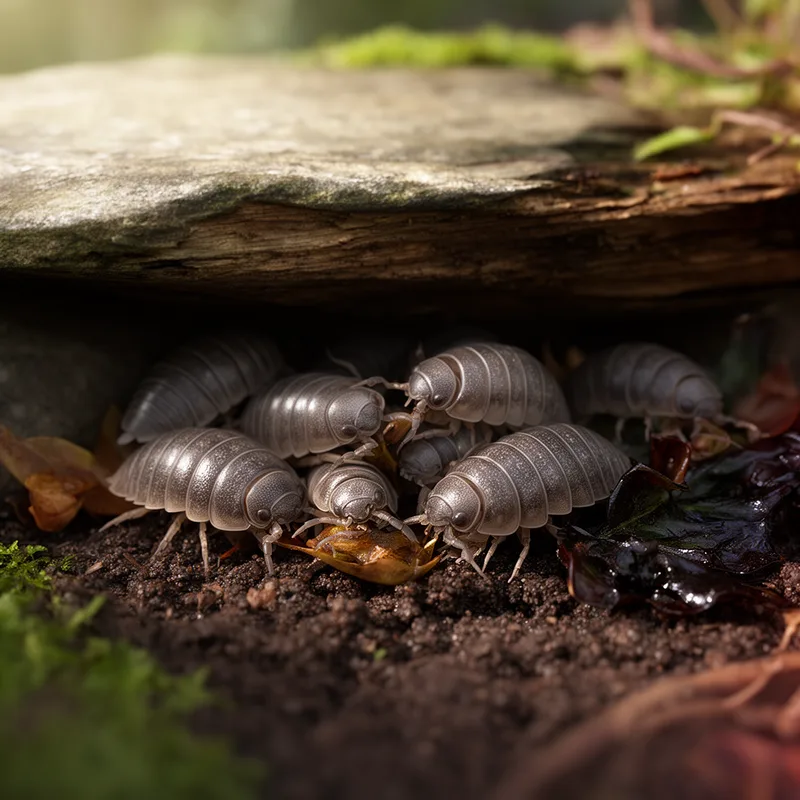
Porcellionidae
- noun
- /ˌpɔrˌsɛlɪˈoʊnɪˌdeɪ/
- Specialized
- Members of the Porcellionidae feed on decomposing plant material, aiding in soil formation.
Examples
-
The Porcellionidae are commonly found under rocks and decaying wood in gardens.
-
Scientists discovered a new species belonging to the Porcellionidae family in southern Europe.
-
The Porcellionidae family includes various species of woodlice.
-
Have you ever seen a Porcellionidae in your garden?
-
The Porcellionidae family includes many species that help decompose organic matter in forests.
-
In many gardens, the Porcellionidae can be seen hiding in damp soil or under fallen leaves.
-
Researchers are studying the Porcellionidae to understand their role in ecosystems as decomposers.
Surface Forms
Morphology
Porcellionidae = Porcellio (opaque) = Porcellion + idae
A Latinized taxonomic formation from the genus name Porcellio plus the family suffix -idae; this requires specialized biological knowledge and is not predictable for an average B1 learner.
Etymology
Porcellionidae comes from the Latin porcellio, meaning 'little pig', plus the family ending -idae used for groups of animals. Because these small, round sow bugs or woodlice often curl up and live under rocks in damp places, the name is a memorable way to say 'the family of little pig–like woodlice'.

