
Pompeii
 12
7.1

- proper noun
- /pɒmˈpeɪ/
- And there's a shrine from an atrium in Pompeii, which shows Mount Vesuvius.
- Pompeii and Herculaneum
- Vesuvius and Pompeii
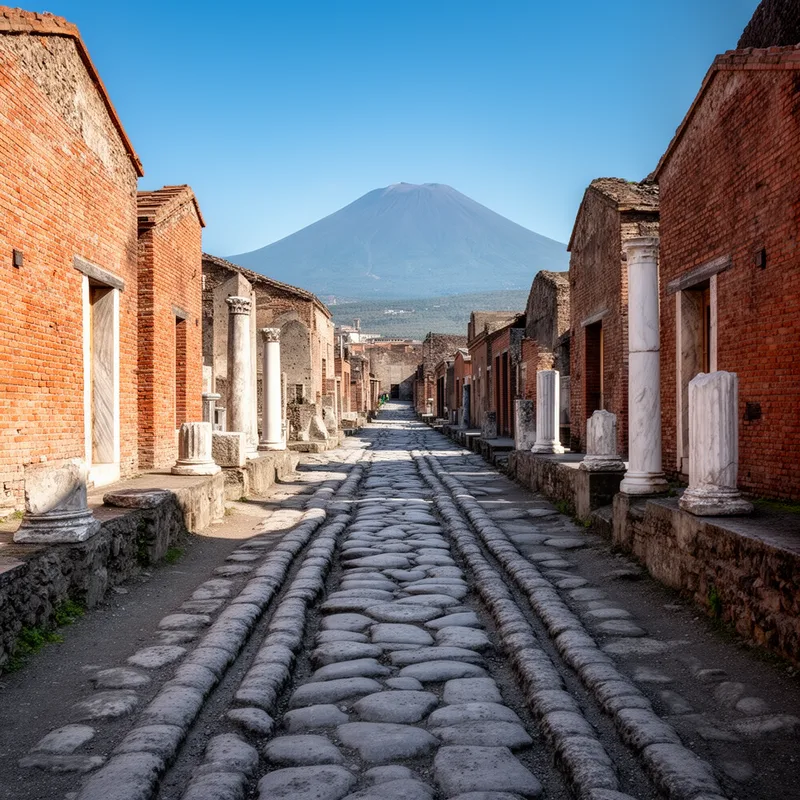
- ruins of Pompeii
Loading YouTube…
Watch on YouTubeAnd there's a shrine from an atrium in Pompeii, which shows Mount Vesuvius.
- And there's a shrine from an atrium in Pompeii, which shows Mount Vesuvius.
- One of them is ancient and the other one is a scroll from Pompeii.
- So these bars show up so often in these working class neighborhoods of Pompeii.
- So Mount Vesuvius is, you know, is the volcano, the volcanic mountain that erupted and buried Pompeii.
- So we've got to ask ourself, So that's actually Pompeii and they're the ovens in Pompeii.
- He was next presented the seal of Pompeii, at which point Caesar broke down in tears.
- I'm guessing this is how the people of Pompeii felt when Vesuvius was trying to get reelected.
Examples
-
However, Pompeii depends on gate receipts for most of the money to care for the site.
Academic text (2006) -
Imagine the dry heat of an early afternoon in August in Pompeii!
Fiction book (1998) -
I'll be your guide to Pompeii, okay?
-
My mother and I had our money and papers stolen in Pompeii just a few hours earlier.
Fiction book (1998) -
We see a grand hall, the Courier of the Theatre of Pompeii, where the Senate met.
-
The house must have belonged to one of Pompeii's leading citizens.
Academic text (2003) -
They say Pompeii was buried under ash after a particularly powerful May Day.
-
In A.D. 62, a large earthquake is known to have hit Pompeii, 17 years before Vesuvius buried it in ash.
Academic text (2010) -
Then we have Roman World: A lusty treat for the senses in the setting of delightful, decadent Pompeii.
-
The ruins of Pompeii attract millions of visitors each year, eager to explore the ancient city.
Surface Forms
Etymology
The word Pompeii comes from an old local Italian language and most likely began as the name of the people or a leading family who lived there. So, the city's name stuck, and we still call the ancient town buried by Mount Vesuvius Pompeii today.