
Polynemidae
- noun
- /ˌpɒlɪˈnɛmɪdeɪ/
- Specialized
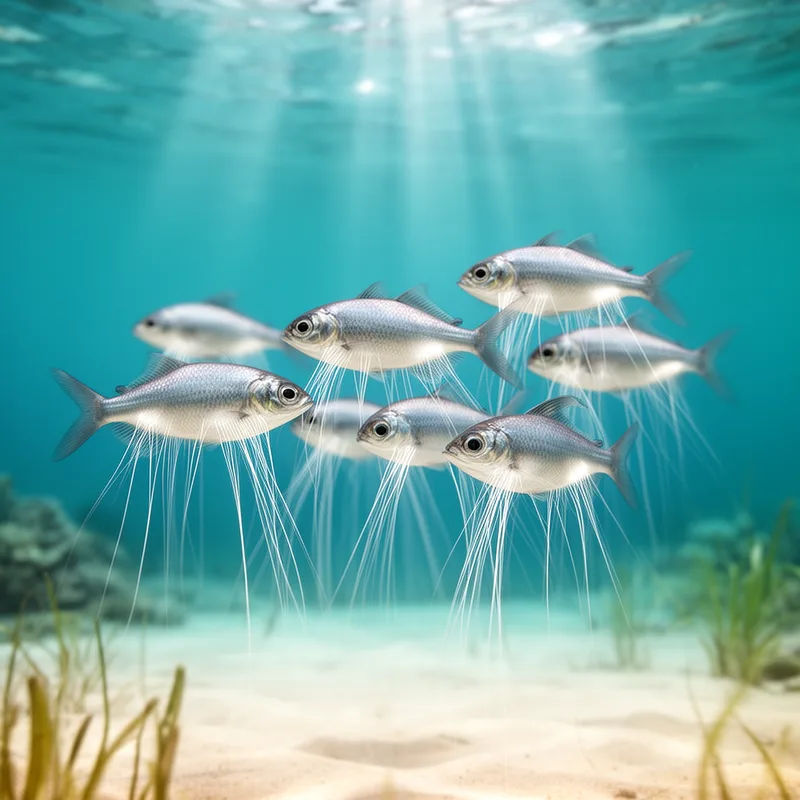
- The Polynemidae family is distinguished by separate threadlike rays extending from their pectoral fins.
Examples
-
Several species within Polynemidae are important for commercial and subsistence fishing.
-
Members of Polynemidae are commonly found in warm, coastal waters around the world.
-
The Polynemidae family includes several species of threadfins.
-
Many Polynemidae are found in tropical waters.
-
The Polynemidae family includes various species known for their distinct long, threadlike fin rays.
-
Many fish in the Polynemidae family thrive in warm coastal regions, making them popular among anglers.
-
Species from the Polynemidae family are often recognized by their unique pectoral fin structures.
Surface Forms
Morphology
Polynemidae = Polynemus (opaque) = Polynemus + idae
Formed by attaching the specialized taxonomic suffix '-idae' to the genus name 'Polynemus'; this family-name formation is specialized and not transparently interpretable by general learners.
Etymology
Polynemidae comes from Greek parts poly- 'many' and nema 'thread', plus -idae 'family'. The fish in this family have many long, thread-like rays on their pectoral fins, so the name means 'many threads' and helps you remember their thin, threadlike fin rays.

