
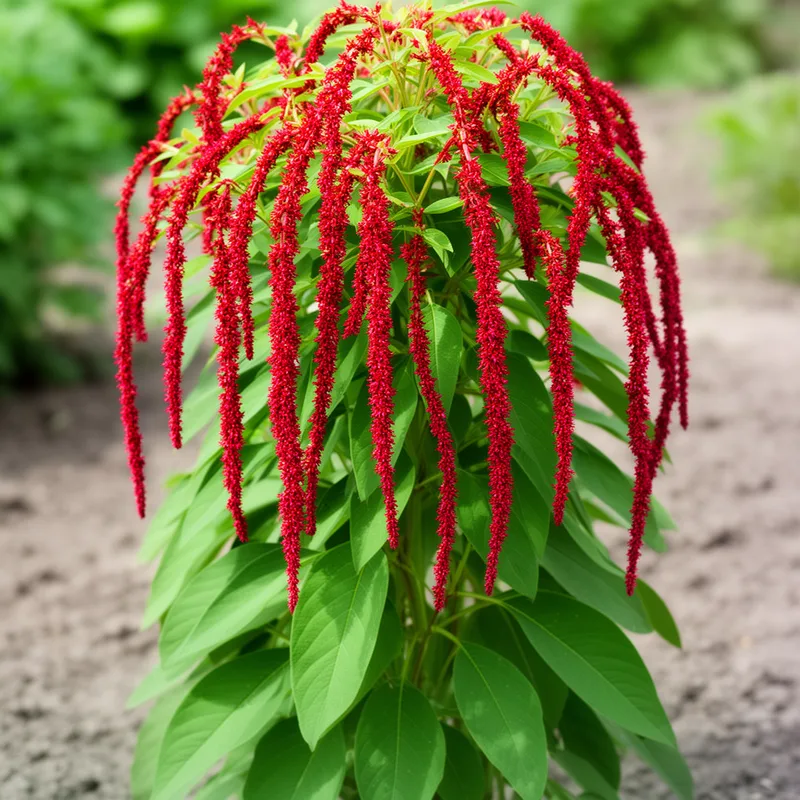
Polygonum orientale
- noun
- Specialized
- Polygonum orientale is valued in ornamental gardens for its striking crimson flower spikes.
Examples
-
Gardeners often refer to Polygonum orientale by its popular name, prince's-feather.
-
The naturalized populations of Polygonum orientale have become common in some parts of North America.
-
The garden was filled with beautiful Polygonum orientale plants.
-
Have you ever seen Polygonum orientale in bloom?
-
Polygonum orientale is valued in ornamental gardens for its striking crimson flower spikes.
-
Gardeners often refer to Polygonum orientale by its popular name, prince's-feather.
-
The naturalized populations of Polygonum orientale have become common in some parts of North America.
Synonyms

 1
9.9
1
9.9

A tall garden plant with long colorful flower spikes

An annual plant with broad rounded leaves and long thin clusters of red hanging flowers

A garden plant with broad leaves and long hanging red flower spikes
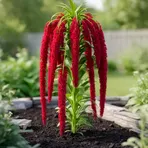
A yearly garden plant with long hanging red flower spikes
Surface Forms
Morphology
Polygonum + orientale
This is a Latin binomial name: the species epithet 'orientale' is cognate with English 'oriental'/'eastern', so a learner who recognises that could infer it denotes an 'eastern' member of the genus Polygonum. However, 'Polygonum' is a specialized genus name (not a common English noun), so without botanical knowledge the overall referent (a specific plant) may not be clear. Because part of the meaning is recoverable from the constituents but the genus is technical, the expression is only partially transparent.
Etymology
Polygonum orientale comes from Latin words that mean 'many joints' and 'eastern'. The name creates a clear image: Polygonum points to the plant's many joints on its stems and orientale shows it came from eastern Asia, so the scientific name describes how the plant looks and where it came from.