
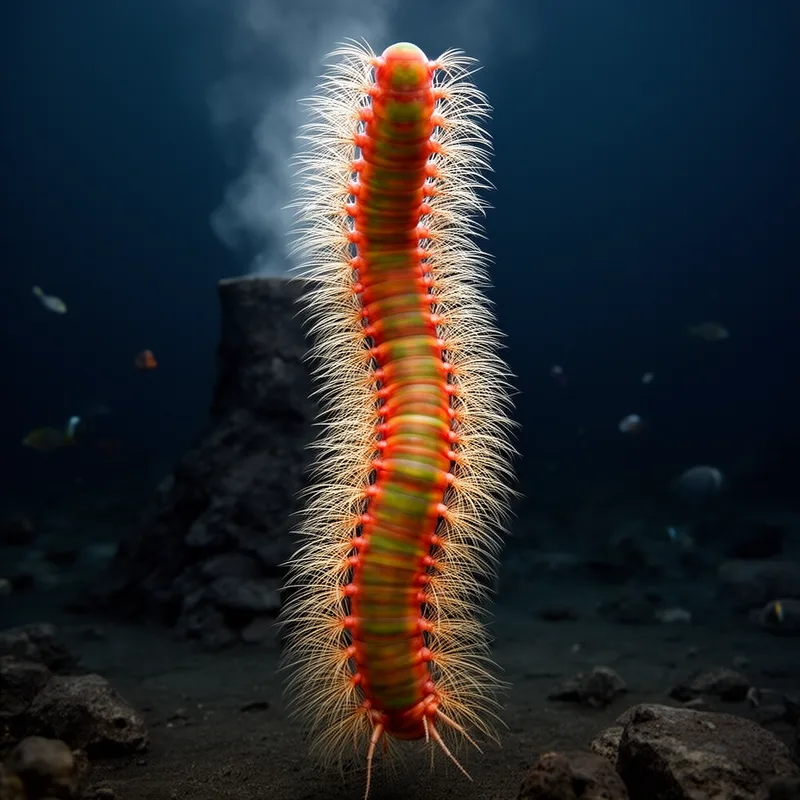
Polychaeta
9.9
Sea worms with many body segments and bristles on most segments
- noun
- /ˌpɒlɪˈkiːtə/
- Specialized
:
Poliquetos
- Some Polychaeta exhibit bright colors and elaborate appendages.
Examples
-
The diet of Polychaeta varies greatly depending on habitat and species.
-
Scientists discovered a new species of Polychaeta living near hydrothermal vents.
-
The Polychaeta class includes various species found in ocean habitats.
-
Many Polychaetes are known for their colorful bristles.
-
Scientists discovered a new species of Polychaeta living near hydrothermal vents.
-
Some Polychaeta exhibit bright colors and elaborate appendages.
-
The diet of Polychaeta varies greatly depending on habitat and species.
Surface Forms
Polychaeta singular
Polychaetes plural
Morphology
Etymology
Polychaeta comes from Greek parts: poly- 'many', as in polygon, and chaeta 'hair' or 'bristle'. These worms have many bristled legs along their body, so the name means 'many-bristled' and helps explain their look.

